
How To Use The Sherwin-Williams 2026 Colormix Forecast (Without Overthinking It)
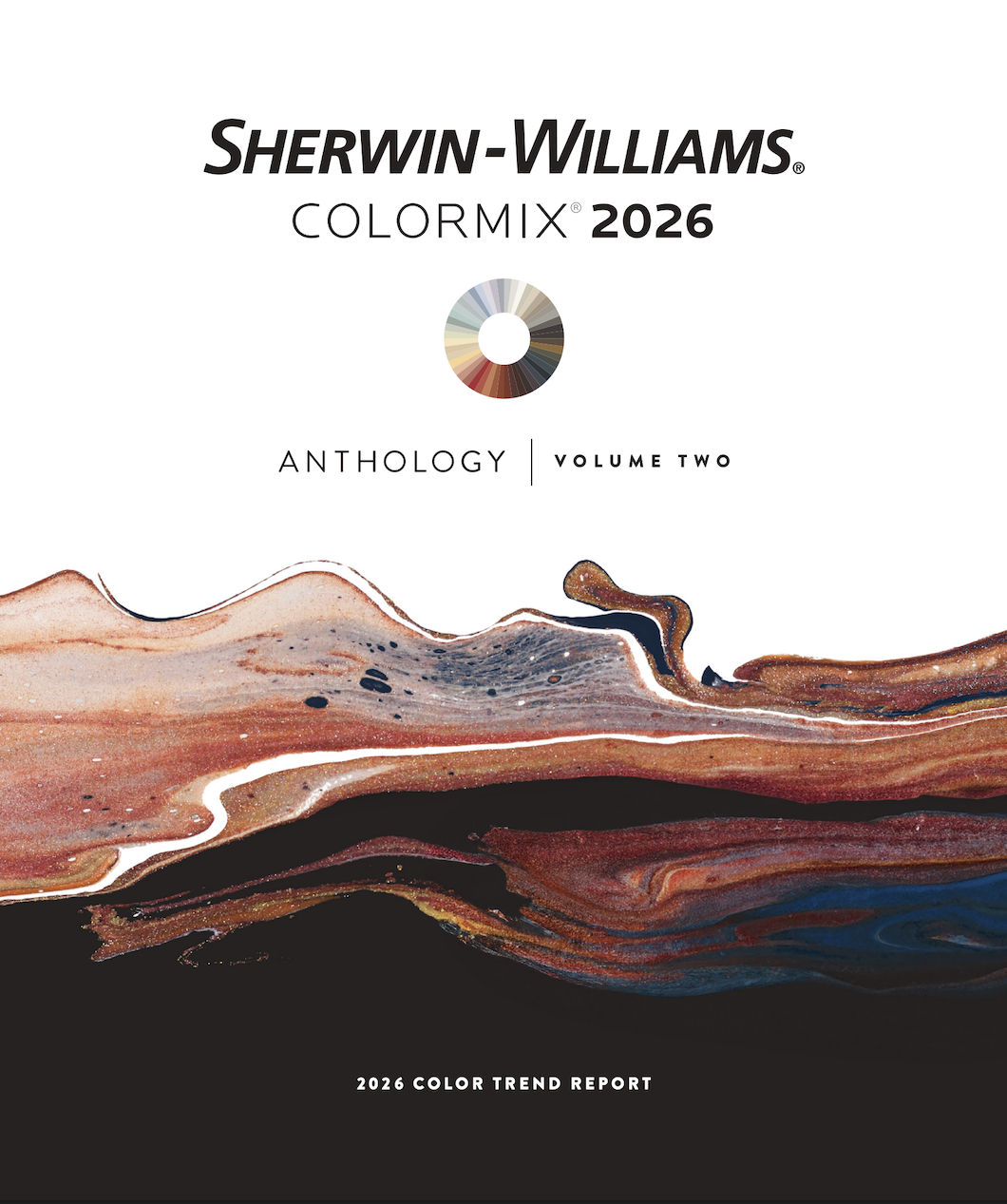
If you’ve looked at the Sherwin-Williams 2026 Colormix Forecast and thought, This is beautiful…and also a lot, you’re not alone. The forecast is expansive by design: multiple palettes, dozens of colors, layered concepts meant to inspire designers, architects, and specifiers.
For homeowners, though, inspiration can quickly turn into paralysis.
That doesn’t mean you’re behind or missing something. It means the forecast is doing exactly what it’s meant to do: open possibilities, not make decisions for you. The key is knowing how to use it—selectively, calmly, and in a way that actually translates to real rooms.
This is where editing matters more than enthusiasm.
First, What the 2026 Forecast Is Really Saying
Zooming out, the Sherwin-Williams 2026 Colormix Forecast isn’t about bold contrast or shock value. It’s about atmosphere. Across all four color families, a few consistent signals show up again and again:
Softer saturation
Warmer undertones
Depth without drama
Neutrals that feel emotional, not empty
In other words, color in 2026 isn’t trying to impress. It’s trying to support.
That shift reflects how homes are being used now: less as backdrops, more as places of restoration. The colors are meant to layer, not compete. To feel steady across seasons and light changes. To hold up when the initial excitement wears off.
That’s good news for homeowners, even if the size of the forecast doesn’t feel that way at first glance.
Why Big Forecasts Feel Overwhelming (And Why That’s Normal)
It’s worth saying plainly: the Colormix Forecast wasn’t created with the average homeowner in mind. It’s a professional tool, built to give creatives a wide range of options.
But homes don’t benefit from endless options. They benefit from clarity.
Most paint regret doesn’t come from choosing the “wrong” color. It comes from choosing too many ideas at once—trying to incorporate multiple palettes, moods, and trends into a single space. What looks cohesive in a trend report can feel scattered in a real house.
So instead of asking, Which palette should I follow?, a better question is:
“What direction is this pointing me toward…and what can I ignore?”
How to Use the Forecast: Think in Roles, Not Palettes
The most practical way to use the Sherwin-Williams 2026 forecast is to stop thinking in terms of full palettes and start thinking in terms of roles. You don’t need a dozen colors. You need a few that each do a specific job well.
Here’s a simple framework that works in almost every home:
One Anchor Color
This is the color that sets the emotional tone. It doesn’t have to be dark or bold, but it should feel grounding.
In the 2026 forecast, anchor colors tend to live in the warmer neutrals or restorative darks—shades that feel settled and confident rather than trendy. These work well in living rooms, dining rooms, or anywhere you want the space to feel composed and intentional.
One Atmosphere Color
This is where personality comes in. An atmosphere color might be softer, lighter, or more expressive—but it still needs to feel calm.
The forecast includes several muted blues, mauves, and sun-warmed tones that excel here. These are ideal for bedrooms, offices, or secondary spaces where mood matters more than impact.
One or Two Supporting Neutrals
These are the colors that make everything else work. Hallways, trim, ceilings, connecting spaces.
The best neutrals in the 2026 forecast aren’t stark whites or flat grays. They’re complex, warm, and flexible—able to shift slightly depending on light and surrounding materials.
That’s it. Anchor. Atmosphere. Support.
You don’t need to pull from every family. You don’t need to prove you understand the forecast. You just need colors that work together in your home.
What to Pay Attention To—and What to Let Go
When homeowners struggle with large trend forecasts, it’s often because they focus on the wrong details.
Pay Attention To:
Undertone (warm vs. cool)
How colors behave in low vs. high light
Whether a color feels calming or activating to you
How it pairs with existing floors, cabinetry, and stone
Let Go Of:
Using every color in a palette
Matching your home to a trend image
Feeling pressure to choose something “new”
Thinking darker automatically means riskier
Many of the most successful color choices we see are quiet ones: colors that don’t call attention to themselves but make a room feel noticeably better to be in.
Why Restraint Is the Real Trend in 2026
One of the most interesting things about the 2026 Colormix Forecast is how much it values restraint. Even the deeper shades feel softened. Even the pastels feel grown up.
This isn’t accidental. It reflects a broader shift away from constant reinvention and toward longevity. Homeowners are more aware now of how tiring visual noise can be. They want rooms that feel settled, not styled for a moment.
That’s why editing the forecast down isn’t missing the point—it is the point.
How This Looks in a Real Home
In practice, using the Sherwin-Williams forecast might look like this:
A warm, grounding neutral as the main wall color
A muted, atmospheric shade in a bedroom or office
A soft, dimensional neutral through halls and common spaces
The result isn’t a “2026 house.” It’s a home that feels cohesive, calm, and quietly current—without being tied to a specific year.
And that’s the goal.
Three Safe-But-Interesting Sherwin-Williams Colors for 2026
If the idea of navigating a full color forecast still feels like too much, this is the shortcut. These three colors sit in that ideal middle ground: not boring, not risky, and versatile enough to live well across different homes and styles.
They’re what we’d call confidence colors — easy to commit to, but not forgettable.
Universal Khaki SW 6150
(Color of the Year)
This is the neutral for homeowners who have outgrown cool gray but aren’t interested in anything overtly beige. Universal Khaki has warmth, depth, and just enough structure to feel intentional.
It works beautifully as a main wall color in open living areas, especially in homes with mixed wood tones or existing finishes you don’t want to fight. It’s grounding without feeling heavy, and it plays well with both light and dark accents.
If you want one color that quietly improves how your whole home feels, this is it.
Redend Point SW 9081
(Warm, Sun-Softened Neutral)
Redend Point is often overlooked because it doesn’t announce itself — but that’s exactly why it works. There’s a subtle clay undertone here that adds warmth without drifting into trend territory.
It’s especially effective in living rooms, kitchens, and transitional spaces that feel a little cold or disconnected. The color has presence, but it doesn’t demand attention, which makes it a strong long-term choice.
For homeowners who want warmth without nostalgia, this is a very safe bet.
Mineral Deposit SW 7652
(Modern Neutral with Dimension)
Mineral Deposit is ideal for anyone easing away from gray but not quite ready for color. It’s soft, flexible, and surprisingly responsive to light, which helps rooms feel layered rather than flat.
This shade works well in hallways, staircases, and living spaces with inconsistent daylight. It bridges warm and cool elements effortlessly, making it especially useful in homes that have evolved over time.
If you’re unsure where to start, Mineral Deposit is often the color that makes everything else fall into place.
Why These Three Work So Well
All three of these colors share one important quality: they edit themselves. They don’t ask to be styled around. They adapt to the room, the light, and the life happening inside it.
And that, more than anything, is what the 2026 Sherwin-Williams forecast is really pointing toward.
A Gentle Reminder Before You Choose
Paint is one of the few design decisions you live with constantly. You see it in the morning, at night, in winter light and summer sun. A color that excites you on a screen can feel very different after six months.
The Sherwin-Williams 2026 Colormix Forecast offers plenty of beautiful options. But you don’t need all of them. You just need the few that align with how your home actually lives—and how you want it to feel.
If you’re unsure which direction makes sense, a professional consultation can help narrow the field, evaluate light and layout, and translate inspiration into something that lasts.
Sometimes the smartest way to follow a trend is to edit it carefully.
Ready for your 2026 color mix? Call or click for your free consultation.
Download The Sherwin-Williams Colormix Forecast 2026 Lookbook!