
What The Design World Is Really Predicting For 2026
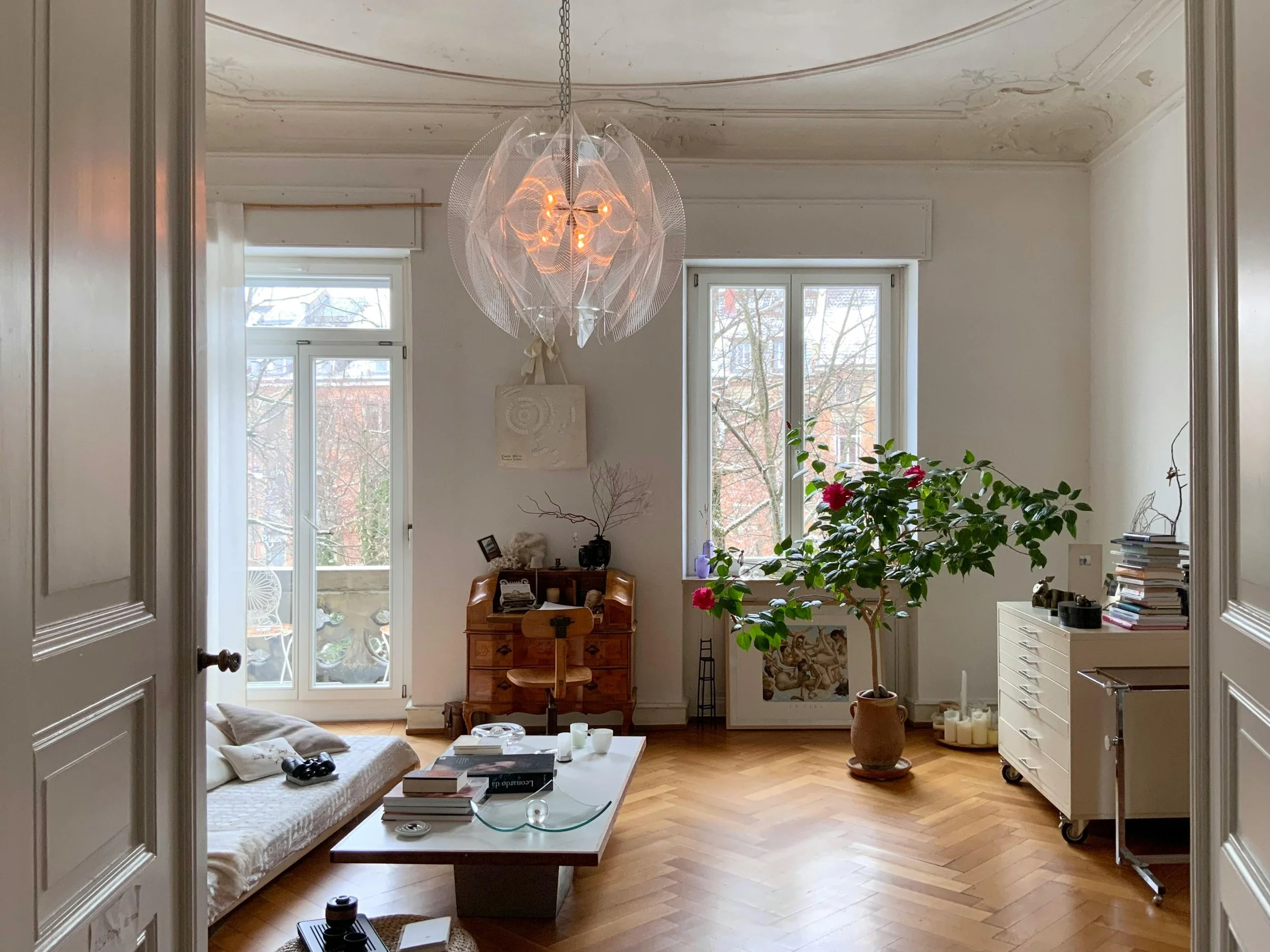
Photo by Lydia Griva
Every year, design forecasts arrive with a familiar energy: new palettes, new names, new declarations about what’s “in.” But 2026 feels different. Quieter. More deliberate. Less interested in novelty for its own sake.
If you step back and listen to what designers, color directors, and editorial tastemakers are actually circling right now, a clear pattern emerges. Not a color. Not a style, but a shift in posture.
Across the industry—from paint companies to design publications—the conversation has moved away from statements and toward settlement. Toward homes that feel emotionally steady, visually edited, and capable of aging without constant correction.
In other words: 2026 isn’t about bold new looks. It’s about fixing what no longer feels right.
Who’s Actually Driving the 2026 Shift (And Why It’s Sticking)
What’s notable about the 2026 design conversation is that it isn’t being led by one aesthetic camp. This shift isn’t coming solely from high-end designers, nor from mass-market brands chasing relevance. It’s emerging from the overlap: where cultural fatigue, professional restraint, and lived experience meet.
Designers who spent the last decade producing highly stylized interiors are openly talking about burnout—not just their own, but their clients’. Homes designed for visual impact aged quickly. They photographed beautifully, but required constant adjustment to feel livable. That friction has become harder to ignore.
At the same time, major paint manufacturers and color authorities are responding to a quieter truth: homeowners are no longer asking for “the look.” They’re asking for relief. For colors that don’t exhaust them. For rooms that feel finished without feeling final.
Even editorial design culture has shifted its language. Instead of “bold,” “fresh,” or “statement,” you see words like grounded, supportive, layered, and timeless appearing again and again. This isn’t accidental. It reflects a growing preference for environments that feel emotionally neutral; not in color, but in demand.
2026 is the result of several years of accumulation: overstimulation, accelerated trend cycles, and a cultural move toward discernment. Designers aren’t abandoning creativity. They’re refining it. And that refinement is what gives this moment its staying power.
This isn’t a swing of the pendulum. It’s a recalibration.
The Big Shift: From Expression to Alignment
For the past decade, design favored visibility. It was all about high contrast, clean minimalism, crisp whites, and sharp blacks. Rooms were designed to look great in photos and to be easy to read. What designers are acknowledging now is that those spaces didn’t always live well.
Homes are being used differently. People are spending more time in them, noticing them more closely, and asking more from them emotionally. As a result, the design world has begun prioritizing alignment over expression and how a space supports daily life, not how quickly it signals taste.
This is why so many 2026 forecasts feel less flashy than previous years. They’re not trying to grab attention. They’re trying to restore equilibrium.
Color Is Getting Quieter—But Not Simpler
One of the most consistent signals across 2026 predictions is this: color hasn’t disappeared, but it has softened.
Designers are pulling away from stark contrast and moving toward muted saturation: colors with depth, nuance, and undertone. Shades that reveal themselves slowly rather than announcing themselves all at once.
This shows up clearly in the language coming from major color authorities like Benjamin Moore and Sherwin-Williams. Both are emphasizing warmth, dimensionality, and emotional readability over drama.
Even when darker or richer colors appear, they’re rarely sharp or glossy. Instead, they feel grounded. Absorptive. Designed to hold a room rather than dominate it.
The takeaway for homeowners is subtle but important: 2026 color isn’t about being bold or safe. It’s about being right.
Neutrals Are No Longer Blank
Another quiet consensus among designers is that the era of “blank” neutrals is ending.
Flat whites and one-note grays—once prized for their flexibility—are increasingly being seen as emotionally empty. They don’t offend, but they also don’t support. In a year when comfort and longevity matter more than neutrality, that’s a problem.
In response, 2026 neutrals are warmer, more complex, and more intentional. They carry undertones. They interact with light. They change subtly throughout the day.
This is where phrases like foundational, anchoring, and supportive keep appearing in forecasts. Neutrals are no longer the absence of color; they’re the structure that allows everything else to function.
Designers aren’t abandoning restraint…they’re redefining it.
Atmosphere Is Replacing the Statement Room
If there’s one concept designers are nearly unanimous on for 2026, it’s this: atmosphere matters more than moments.
Rather than one standout room or dramatic accent wall, designers are thinking in envelopes: how color wraps, flows, and carries from space to space. Color-drenching hasn’t gone away, but it’s being used more thoughtfully, often with softer hues and lower sheens.
The goal isn’t impact. It’s continuity.
Rooms are meant to feel cohesive at night as well as during the day, in winter as well as summer. This long-view thinking reflects a broader cultural shift: people want spaces that remain comfortable long after the initial excitement wears off.
That’s why so many 2026 interiors feel calm, layered, and quietly immersive rather than styled for immediate effect.
Editing Has Become the New Marker of Taste
Here’s a secret that designers don’t always share: the most elegant homes aren’t the ones with the most ideas. They’re the ones with the fewest, carefully selected ones.. In 2026, editing is emerging as a status signal.
Homes that rely on restraint, repetition, and tonal harmony feel more confident than those chasing every micro-trend. Designers are intentionally limiting palettes, reducing contrast, and allowing materials and finishes to carry more of the visual interest.
This doesn’t mean homes are becoming boring. It means they’re becoming more deliberate.
Paint, in this context, is no longer decorative. It’s corrective. It’s used to calm busy spaces, warm cold ones, and unify rooms that have drifted apart over time.
Trends Are Slowing Down—On Purpose
Perhaps the most important prediction for 2026 isn’t about color at all. It’s about time.
Designers are forecasting longer relevance windows. Fewer seasonal refreshes. More decisions made with a five-to-ten-year horizon in mind. This is partly economic, partly emotional, but it’s also philosophical.
Homes aren’t disposable. And paint, while relatively easy to change, still shapes how a space feels every single day.
That’s why the design world is encouraging homeowners to choose colors that can live quietly in the background of evolving lives, rather than anchoring a home to a specific year.
What This Means for Homeowners in 2026
If you’ve felt less interested in “what’s trending” and more focused on how your home actually feels, you’re not behind. You’re aligned with where design is heading.
The dominant message of 2026 isn’t about following rules. It’s about noticing misalignment — rooms that feel too stark, too busy, too flat — and making small, thoughtful corrections.
Often, paint is the easiest place to start.
Not to reinvent your home, but to bring it back into balance.
A Quiet Closing Thought…
Design forecasts will always exist. Some years they shout. Some years they whisper.
2026 is a whisper year.
If you’re drawn to softer colors, warmer neutrals, and spaces that feel settled rather than styled, you’re responding to the same signals designers are. And if you’d like help translating that instinct into choices that work with your home’s light, layout, and long-term use, thoughtful guidance can make all the difference.
The best homes don’t chase the future…
They make room for it.
Call 475-252-9500 or online for your free 2026 paint consultation.
Further Reading: 2026 Design & Color Trend SignalsIndustry & Editorial Trend ForecastsThese 10 Interior Design Trends Are Already Defining 2026, According to Pros — highlights warmth, tactility, personalized spaces, and layered interiors.The 11 Key Interior Design Trends Set to Define 2026 (Vogue) — explores lived-in, organic, and richly textured interiors that reflect cultural shifts.6 Interior Design Trends Experts Predict Will Define 2026 — includes comfort, wellness environments, soft sculptural shapes, and color direction from designers.Quiet Luxury Is Officially Out — Designers Predict This Will Be the Look of 2026 — a cultural counterpoint that designers are rejecting sameness and embracing storytelling and meaningful layers.
Trend Reporting on Color DirectionThe Biggest Color Trends of 2026, According to Paint Experts — outlines earthy vibrancy and nuanced color directions across interiors.Interior Designers Share Their 2026 Colors of the Year — highlights warm, earthy browns and nature-inspired hues gaining traction.