
The Other Occupants: How Homes Are Quietly Being Designed Around Them
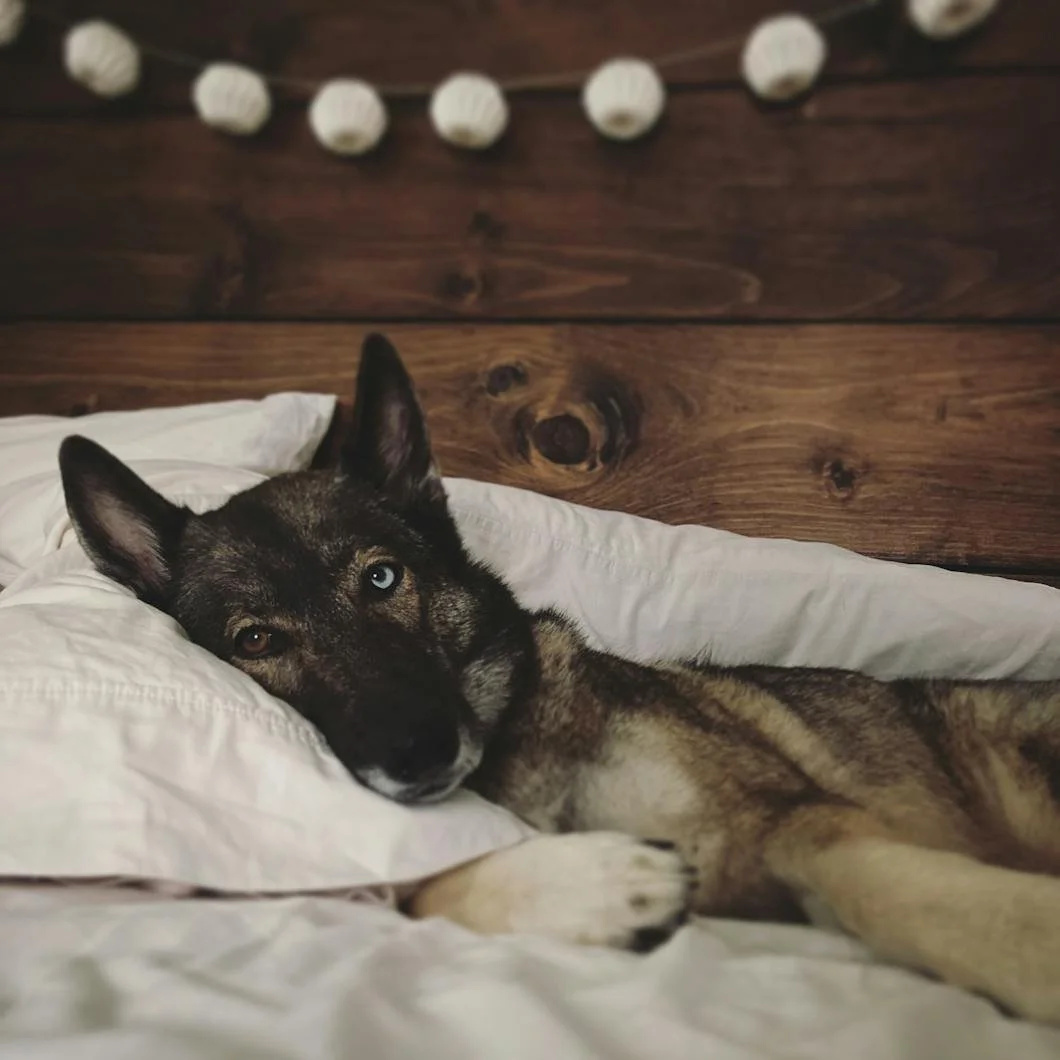
Photo by Emily Fuller
There are certain things you begin to notice once you’ve lived with an animal long enough; these little quirks, which may be almost imperceptible at first, gradually become part of your daily awareness.
Typically, it starts with movement: the paths they take through the house, often consistent to the point of being almost architectural. A practiced turn at the same corner. A familiar pause in the same patch of light. A clear preference for one room in the morning and another at the end of the day, as if the house quietly shifts in purpose depending on the hour.
Over time, those patterns stop feeling incidental andt hey begin to feel like structure.
For a long time, homes were not designed with that structure in mind.
They were designed for people, first and entirely, with everything else arranged around that assumption. Pets were accommodated after the fact: beds placed in corners, bowls set along walls, small adjustments made within a space that had already been decided.
Nothing about the home itself changed.
Only what was added to it.
And for the most part, that approach worked well enough.
What’s beginning to change, though, is not the presence of pets in the home, but the role they play in how the home is shaped.
Rather than being fitted into existing spaces, they are increasingly being considered from the outset. Feeding areas built into cabinetry. Sleeping spaces that feel less like additions and more like extensions of the room. Storage that accounts for movement, not just objects.
At a glance, these shifts can look like features.
But underneath, they point to something more fundamental: the house is no longer being designed around a single type of occupant.
This becomes more noticeable when you begin to think about the home not just as a series of rooms, but as a system of movement.
Animals don’t move through a house the way people do. They don’t divide space according to purpose—living room, dining room, bedroom. They move according to comfort, light, proximity, and routine.
A dog might follow a path that traces the perimeter of the home, circling through spaces that were never meant to connect in that way. A cat might occupy vertical layers of a room, turning shelves, window sills, and the tops of furniture into a secondary architecture that exists above the one that was designed.
These patterns don’t disrupt the home, instead they reveal another version of it. And once you begin to see that version, it becomes difficult not to account for it.
Circulation starts to matter in a different way. Not just how people move from one room to another, but how the space feels when it’s in use throughout the day. Where it’s quiet. Where it’s active. Where it holds stillness long enough for something—or someone—to settle into it.
The house, in that sense, becomes less fixed and more responsive.
This is where design begins to shift, though often in ways that are subtle enough to go unnoticed.
Materials are chosen not just for how they look, but for how they hold up to movement that is lower to the ground, more frequent, less predictable. Edges soften. Surfaces become more forgiving. Storage becomes less visible, not because it’s unnecessary, but because it’s been integrated more carefully into the structure of the space.
Even the layout itself begins to adjust.
Rooms that once felt separate begin to open slightly, allowing for continuity of movement. Spaces that were once decorative begin to take on more practical roles, simply because they are used more often than originally expected.
None of this is dramatic, but it does accumulate.
Color, too, begins to take on a different role.
For a long time, color in the home has been treated as a primarily visual decision—something chosen for its aesthetic value, its relationship to light, or its alignment with a broader design style.
But in a space that is actively lived in by more than one kind of occupant, color becomes environmental.
Not just how it looks, but how it behaves.
High-contrast transitions that might feel sharp or energetic in a photograph can read as disruptive when experienced continuously. Brighter tones that feel clean and open at first can become overstimulating over time, particularly in spaces that are used throughout the entire day.
Softer palettes, by contrast, tend to hold the space more evenly. They allow movement without interruption. They create a kind of visual consistency that doesn’t demand attention at every turn.
This isn’t about designing for pets in a literal sense. It’s about recognizing that a home functions differently when it is shared. And that recognition tends to bring the focus back to something more foundational: not features, not trends, but use.
The most effective spaces—whether designed consciously or arrived at over time—are the ones that accommodate how the home is actually lived in, rather than how it was originally intended to be used.
That includes the people who move through it. And increasingly, it includes the ones who move differently.
What’s interesting is that this doesn’t make the home feel more specialized. If anything, it makes it feel more complete.
Because the adjustments that support one type of occupant often improve the experience for everyone else as well. A more continuous layout feels easier to move through. Softer materials feel more comfortable over time. A more balanced palette feels less fatiguing the longer you’re in it.
The house doesn’t become divided—it becomes aligned. And that may be the more important shift taking place.
Not that homes are being designed for pets, but that they are being designed with a broader understanding of who—and what—they are for.
In the end, the most interesting homes are not the ones that account for every detail individually.
They are the ones that respond to how the space is used, quietly and consistently, until the structure of the home begins to reflect the life inside it.
Not just in appearance, but in movement.
Ready to Help
If you’re considering how your home might better reflect how it’s actually used—through layout, material choices, or the way color shapes the space—paint often plays a foundational role in how everything comes together.
At Stanwich Painting, every project begins with a detailed estimate that outlines preparation, materials, and the full scope of work before anything begins. That clarity ensures the finished result feels cohesive, intentional, and built to last.
To schedule a consultation, visit or call 475-252-9500.
Stanwich Painting proudly provides top-quality residential painting services throughout Fairfield County, including: Greenwich, Cos Cob, Riverside, Old Greenwich, Stamford, Darien, New Canaan, and Wilton
Further ReadingPet-Centric Living: 17 Next-Gen Pet Design Ideas That Merge Comfort and Aesthetics
A strong visual and conceptual overview of how pets are no longer treated as add-ons, but as fully integrated participants in the home—through built-ins, spatial planning, and design continuity. https://www.home-designing.com/pet-centric-living-17-next-gen-pet-design-ideas-that-merge-comfort-and-aestheticsWhy Cat-Friendly Interiors Are Taking Over in 2026
A recent look at how designers are incorporating pet behavior directly into layouts—think built-in hideaways, vertical movement, and outdoor enclosures—without sacrificing aesthetics. https://www.homestolove.com.au/interiors/cat-friendly-interiors/How Pets Are Quietly Reshaping Home Design
A broader industry perspective showing the shift from “pet-friendly” to “pet-considered,” where layout, materials, and daily function are designed with animals in mind from the start. https://www.decorationrunway.com/post/september-2025-pawfect-interiors-how-pets-are-quietly-reshaping-home-design