
Cracks In The Wall
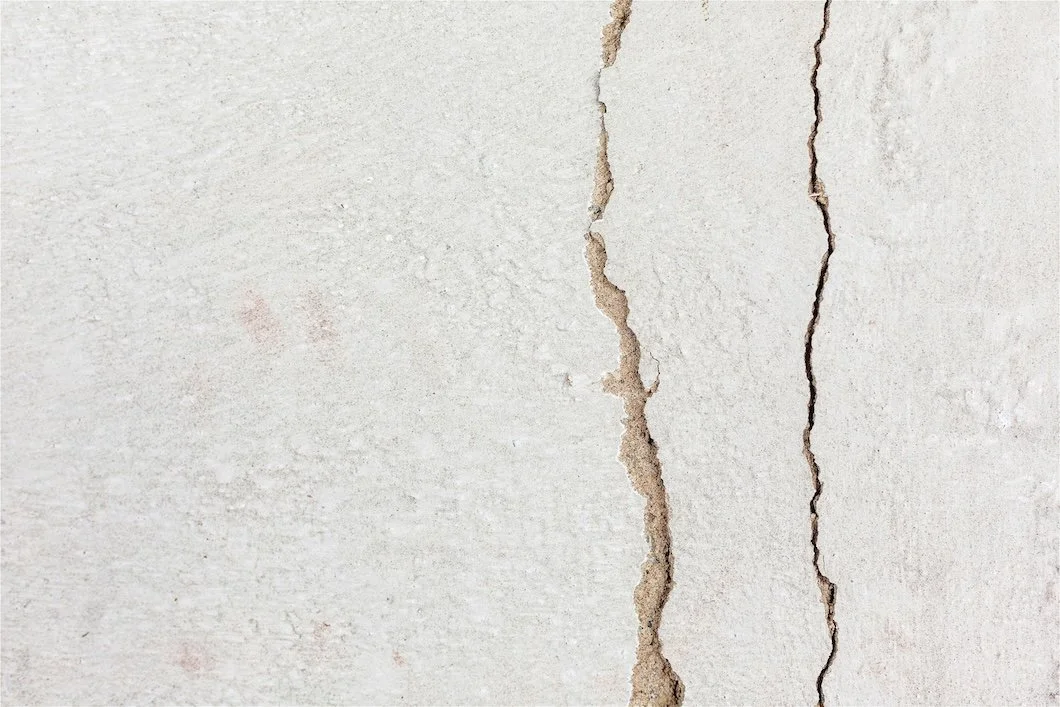
Photo by Natalie Kinnear on Unsplash
Walls are meant to feel continuous: flat, uninterrupted, and holding the room together without drawing attention to themselves. That continuity is what creates the sense of stability inside a home—nothing shifts, nothing breaks, everything reads as solid and resolved.
A crack interrupts that immediately.
It doesn’t need to be large. A thin line along a ceiling edge, a seam opening slightly above a doorway, a hairline fracture moving across plaster. The structure of the house hasn’t changed in any meaningful way—especially in older homes, where layers of brick, framing, and plaster are doing far more work than the surface suggests—but the feeling does.
For a moment, it’s enough to make you stop and think: something moved.
In most cases, that instinct is stronger than the reality.
Houses are not static. They expand, contract, settle, and adjust constantly, responding to changes in temperature, humidity, and time itself. Materials meet at different points, carry different loads, and move at different rates. Over years—and sometimes decades—that movement has to show itself somewhere.
It shows itself at the surface. A crack, in that sense, is rarely the problem. It’s where the process becomes visible.
This is especially true in older homes.
In a house built with plaster over wood lath, or framed against masonry, what you’re seeing on the surface is only the final layer of a much deeper system. Behind that wall are multiple materials, each doing its own work, each responding slightly differently to the same conditions.
The house is not fragile. It’s layered. And those layers are designed to move.
But the surface doesn’t explain that. It simply records it.
That’s where the tension comes in.
Because what a crack communicates visually is not complexity—it’s interruption. A line where there wasn’t one before. A break in what had been continuous. Something that suggests, even if only briefly, that the structure is no longer as fixed as it appeared. Rationally, most homeowners understand that a small crack is not a structural failure.
But perception doesn’t operate on logic alone. What makes cracks so noticeable isn’t their size—it’s that they break the sense of permanence. And once that permanence is interrupted, the eye begins to return to it. Not constantly, but often enough that it becomes part of how the room is experienced. You pass through the space and your attention catches it again. The line hasn’t changed—but your awareness of it has.
What was once a neutral surface becomes something slightly unresolved: not damaged, necessarily—just no longer complete. This is where the difference between structure and surface begins to matter.
Structurally, the house is doing what it has always done: holding together, distributing weight, adjusting to seasonal changes. In many cases, especially in well-built older homes, those underlying systems are far more durable than the finishes applied over them. But surface conditions operate on a different level. They define how the house is read.
A wall can be structurally sound and still feel visually unsettled. A ceiling can be perfectly secure and still carry a line that draws the eye every time you enter.
And over time, those surface conditions begin to shape the overall impression of the home—even when nothing fundamental has changed beneath them.
Paint is where that distinction becomes most visible. Not because it creates cracks, but because it reveals them.
A properly prepared and finished surface can absorb minor movement—seams reinforced, transitions smoothed, the finish remaining continuous even as the structure behind it adjusts. But when preparation is rushed, or when previous repairs only addressed the surface, those same areas tend to reopen. Lines return, edges separate and what had been temporarily concealed comes back, often more clearly than before.
The paint doesn’t fail. It reveals what’s happening beneath it. This is why cracks tend to reappear in the same places—along ceiling lines where framing meets drywall, at corners where different planes intersect, above doors and windows where structural loads concentrate and shift over time.
These are not random locations. They are points of movement. And because they are consistent, they require more than a cosmetic fix. Addressing them properly isn’t about hiding the line. It’s about understanding why it’s there, and preparing the surface in a way that allows it to hold—reinforcing seams, using more flexible compounds, and adjusting the finish so it can move slightly without breaking.
None of this is dramatic, but it is precise. What homeowners respond to, though, is rarely the technical side. It’s the way it feels.
A crack introduces uncertainty into a space that otherwise reads as fixed and controlled. And once that suggestion is there, it tends to carry more weight than it should. Most cracks aren’t warnings. They’re signals.
Signals that the surface has reached a point where it no longer fully reflects the condition of the structure behind it—that the finish, rather than the house itself, is what needs attention.
In a well-built home, a crack is rarely an indication of failure Instead, tt’s an indication that the house is still in motion. And that the surfaces, eventually, need to be brought back into alignment with that movement.
Because what defines the feeling of a space is not just its structure. It’s how that structure is presented.
Smooth where it should be smooth. Continuous where it should be continuous. Stable—not because nothing moves, but because the movement is absorbed before it reaches the eye.
Most homeowners don’t act on the first crack: they recognize it, register it, and move on.
What leads to action is something quieter—the realization that it isn’t just one. That the same line appears in a second place, or a third. That the surfaces of the home, taken together, are beginning to feel slightly out of step with the strength of what’s behind them.
At that point, it’s no longer about a single mark…
It’s about restoring the continuity that allows the house to feel settled again and bringing the surface back into alignment with the strength behind it.
Ready to Help
If you’ve started to notice cracks or surface changes in your home, the solution isn’t just to cover them—it’s to address them properly so they hold over time.
At Stanwich Painting, every project begins with a detailed estimate that outlines surface preparation, materials, and the full scope of work before anything begins. That clarity ensures repairs aren’t just cosmetic, but built to last and aligned with how the home actually moves.
To schedule a consultation, visit or call 475-252-9500.
Stanwich Painting proudly provides top-quality residential painting services throughout Fairfield County, including: Greenwich, Cos Cob, Riverside, Old Greenwich, Stamford, Darien, New Canaan, and Wilton