
The Hidden Side of the House: Where Exterior Paint Tells the Truth
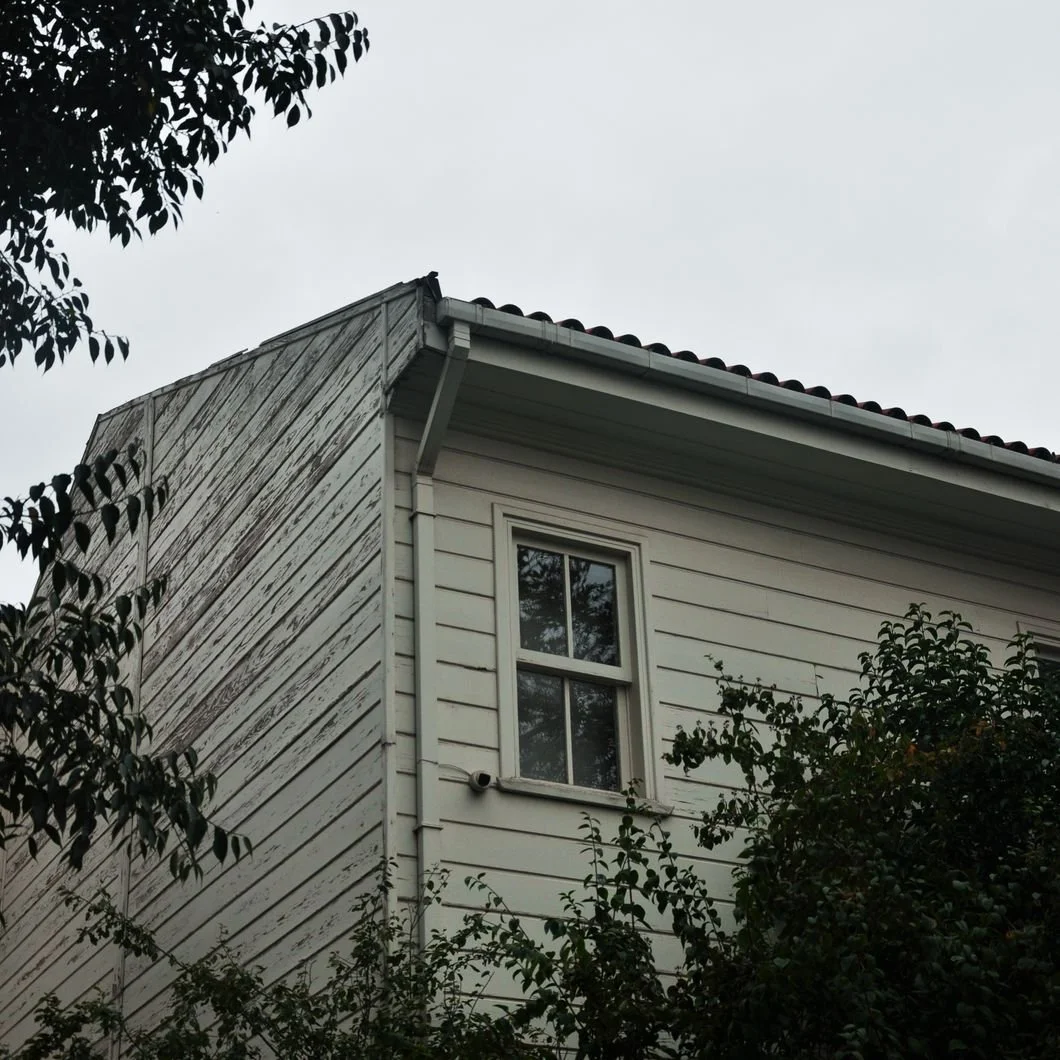
Photo by Ninety Seven Years
Have you ever been wandering through a neighborhood and noticed a house you have somehow never really noticed before?
Maybe it is older. Maybe it has good bones. Maybe the front door has presence, or the windows still know how to hold themselves. Maybe the roofline, stonework, trim, and proportions all come together in that quiet way older homes sometimes do.
And you think:
“Lovely.”
But then you keep walking.
You pass along the side.
Not the garden side. Not the porch side. Not the view that appears in real estate photos or family pictures….
The other side.
The narrow side. The shaded side. The side that sits close to a neighboring building, a fence, a row of shrubs, a garage, or a walkway nobody uses unless they have to.
And there, the truth is different.
The paint is darker. The trim is crustier. The architectural details have lost their crispness. Dirt has settled into corners. Mildew has gathered where the sun does not quite reach. Window sills, brackets, downspouts, clapboard seams, and foundation lines carry the signs of weather in a quieter, heavier way.
Every house has a public face. But the hidden side of the house often tells the more honest story.
This is not always because the hidden side is older, worse built, or painted differently. Often, it is simply because no one spends much time looking at it. The front gets attention because it welcomes guests. The back gets attention because that is where patios, decks, gardens, kitchens, and summer evenings often live. But the side yard, the narrow passage, the tucked-away elevation near the utilities or the neighbor’s fence, can become an exterior blind spot.
And blind spots age.
Out of Sight Becomes Out of Maintenance
Exterior painting is usually discussed in terms of the obvious signs: peeling paint, fading color, cracked caulk, soft wood, exposed primer, or weathered trim. And those signs definitely matter. But on the hidden side of a house, the problem is often more subtle at first because it’s not always dramatic failure…
It is accumulation.
A little moisture that lingers longer than it should, a little grime that never fully washes away, a little mildew under the eaves—these small signs creep up quietly until the paint, the wood, the finish all begin to suffer. A downspout that splashes the same area season after season, shrubs that grow too close to the siding, a narrow walkway where air does not circulate—each one traps dampness and invites decay. A window sill that stays damp, a painted detail that collects debris in its small ledges and grooves; left unchecked, these tiny problems become costly repairs, but addressed early they yield simple, lasting protection.
Individually, these things may seem minor. Together, they can change the condition of an exterior surface.
The hidden side of the house is often where maintenance gets postponed because it does not demand attention every day. It is not the view from the driveway. It is not the entrance guests use. It is not where anyone stands with a cup of coffee admiring the morning light. So the paint can quietly move from weathered to compromised.
This is why exterior inspections should not only happen from the street. A house needs to be walked around slowly. The less glamorous sides deserve the same attention as the front elevation, and sometimes more.
Shade Changes the Mood of Paint
Shade is not a problem by itself. In fact, shaded elevations can protect exterior paint from the harshest effects of direct sun. They may not fade as quickly as sunny sides. They may hold color longer. But shade brings a different set of concerns.
Where sunlight is limited, moisture tends to linger. Morning dew may take longer to dry. Rainwater may evaporate more slowly. If trees, fencing, neighboring buildings, or dense landscaping restrict airflow, the surface can stay damp for extended periods. That is when mildew, algae, grime, and dirt have more opportunity to take hold.
This is especially noticeable on older homes and older buildings with layered architectural details. A flat wall may show wear one way. But a detailed exterior has more places for moisture and dirt to settle.
Small ledges. Trim returns. Brackets. Window heads. Sills. Cornices. Porch details. Clapboard edges. Door casings. Foundation transitions.
These details give a house character, but they also create little resting places for weather. When they are clean, prepared, primed, and painted correctly, they sharpen the architecture. When they are neglected, they begin to look heavy. The house may not be falling apart, but it starts to lose its clarity.
The shaded side can become visually darker not because of the chosen color, but because the surface has collected years of residue.
The Narrow Passage Has Its Own Climate
One of the most overlooked exterior conditions is the narrow passage between buildings.
It may be a side yard only a few feet wide. It may be a walkway between an older house and its neighbor. It may be the space beside a garage, along a fence, near trash bins, beside basement doors, or under a line of trees. These areas often have their own little climate.
Areas with shade can receive less sun and often trap humidity, staying cooler and collecting leaves, while locations exposed to splashback from rain or interrupted by downspouts, vents, meters, utility boxes, or exterior pipes present uneven surfaces and may be difficult to access with ladders, washing equipment, scraping tools, or paint application.
That difficulty matters.
Hard-to-reach areas can become under-maintained simply because they are inconvenient. A painter still has to clean, prep, prime, repair, and coat those surfaces properly. But the physical conditions make the work more demanding. Tight spaces require patience. They require careful protection of neighboring surfaces. They require attention to drainage, airflow, and the age of the existing paint.
A narrow side yard is not just a smaller version of the front of the house. It is often a more complicated painting environment.
Details That Often Get Overlooked
On the hidden side of a house, the details most likely to be overlooked are usually the ones that need the closest inspection. These features may not define the first impression from the street, but they often carry the signs of exterior wear.
Window sills and lower trim
These areas collect water, dirt, and debris. If paint fails here, moisture can begin to affect the wood underneath.Downspout areas
A downspout that leaks, overflows, or splashes against siding can create repeated moisture exposure in one concentrated location.Corner boards and clapboard seams
These lines help define the structure of the house, but they can also reveal cracking, separation, peeling, or failed caulk.Foundation transitions
Where siding, trim, stone, brick, or foundation surfaces meet, moisture and grime often collect.Utility areas
Meters, vents, conduit, exterior pipes, and service panels can make prep and painting more awkward, which is why these areas should be handled carefully rather than rushed.Eaves and shaded overhangs
These areas may develop mildew or staining, especially where airflow is limited.Architectural trim and decorative details
Brackets, cornices, casings, and carved or layered trim can lose definition when old paint builds up, chips, or collects grime.Areas behind shrubs or plantings
Landscaping placed too close to the house can trap moisture and prevent proper access for inspection, washing, and painting.
These are not always the features that make someone call a painter. But they are often the features that reveal whether an exterior is being maintained as a whole.
You Cannot Paint Over the Crust
The hidden side of the house is where preparation matters most.
It can be tempting to think of a shaded, narrow, seldom-seen area as less important. After all, if very few people look at it, why worry so much about the finish?
But exterior paint does not only exist to be seen. It exists to protect.
If there is mildew, it needs to be treated. If paint is peeling, it needs to be scraped and sanded. If caulk has failed, it needs to be removed and replaced properly. If wood is soft or damaged, it needs to be addressed before paint goes on. If old coatings have built up heavily around details, the surface may need careful preparation to restore a cleaner profile.
Painting over grime, mildew, failed caulk, or loose paint does not solve the problem. It only traps the problem under a new color.
This is why the hidden side is the true test of exterior painting discipline: the front of the house rewards beauty, but the hidden side demands honesty. It asks whether the surface was actually cleaned, whether the prep was thorough, whether the primer was chosen correctly, and whether the painter paid attention even when the wall was not glamorous.
A good exterior paint job is not only visible where everyone looks—it holds up where almost no one looks.
The Hidden Side Still Belongs to the House
There is something quietly satisfying about restoring the overlooked parts of a home.
Not because every side needs to be showy or a narrow side yard suddenly needs to become a design feature. But because the house feels better when all of it has been cared for. The public face may create the first impression, but the hidden side carries the integrity of the whole.
This is especially true for older homes and buildings with character. Their beauty is not only in the front door, the porch, or the symmetrical windows. It is in the way the entire structure holds together. When one side becomes dark, crusted, neglected, or visually heavy, the house loses something, even if most people cannot immediately name what it is.
Exterior paint brings surfaces back into relationship. It restores protection, but it also restores clarity. The details sharpen. The siding feels cleaner. The trim carries its shape again. The house looks less tired, not because it has been made flashy, but because it has been properly attended to.
Every house has a side nobody looks at first.
The narrow side. The shaded side. The practical side. The side with the meters, the shrubs, the damp corner, the old trim, the awkward walkway.
But that side still belongs to the house. And sometimes, it tells the truth before the front ever does.
Ready For Your Free Consultation?
Stanwich Painting proudly provides top-quality residential painting services throughout Fairfield County, including: Greenwich, Cos Cob, Riverside, Old Greenwich, Stamford, Darien, New Canaan, and Wilton