
What Do I Do With These Closets?
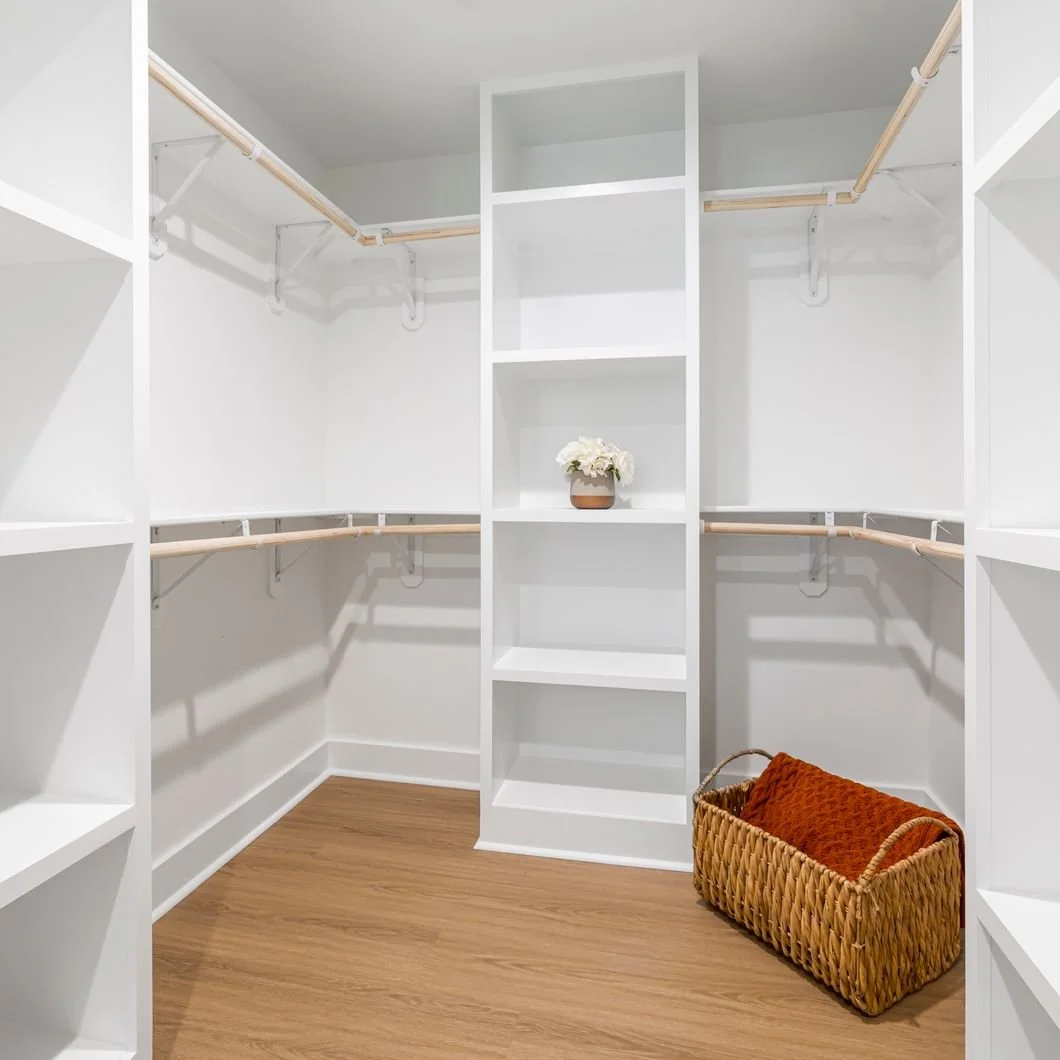
Photo by Curtis Adams
There comes a strange moment in the life of a home when you open a closet door and suddenly become…offended.
Not deeply offended. Not morally offended. Just quietly, privately affronted.
You were only trying to grab a coat, a guest towel, a vacuum attachment, or the one reusable shopping bag that somehow contains seventeen other reusable shopping bags. But then the door opens, the light hits the wall, and something feels, well, just weirdly wrong.
The closet does not match the rest of the house.
Maybe the walls are still painted in that flat, chalky white that seems to belong to no decade in particular. Maybe there is a plaster crack creeping across the back wall. Maybe the shelf was painted once, badly, and has been collecting scuffs ever since. Maybe the trim is yellowed. Maybe the lighting is tragic. Maybe the floor is fine, but the walls behind the coats make the whole little space feel forgotten.
And then, naturally, comes the self-questioning.
“Am I really this person now? Am I the kind of person who is bothered by a closet interior? Is this refinement, or have I crossed some invisible line into decorative vanity?”
The answer is kinder than you think.
No, you are not ridiculous for noticing the closet. A closet may be hidden most of the time, but it still belongs to the room. It has walls, trim, a ceiling, shelving, light, and a purpose. It may not need to become a jewel box or a boutique dressing salon, but it also does not need to feel like the part of the house where everyone gave up.
Closets are often the last unconsidered spaces in a home. We paint the bedroom, refresh the hallway, update the guest room, choose the perfect color for the powder room, and then leave the closet behind the door as a strange little historical record of every shortcut ever taken. Old paint, old wallpaper, patched plaster, scuffed baseboards, mismatched shelving, and a suspicious stain that no one wants to investigate too closely.
It is not glamorous. But it is real.
And once you notice it, you cannot always unnotice it.
Closets Are Rooms, Even If We Pretend They Are Not
The first mistake is thinking of a closet as storage only.
Of course, storage is the practical purpose. Closets hold coats, clothes, shoes, towels, toys, luggage, extra bedding, cleaning supplies, wrapping paper, mystery bins, and the seasonal items we insist we will organize properly next year. But visually and emotionally, closets still contribute to the room they serve.
An entry closet affects the foyer. A guest room closet affects how finished the guest room feels. A linen closet affects the hallway. A child’s closet affects the mood of the bedroom. A walk-in closet affects the daily ritual of getting dressed, whether that ritual feels calm and pleasant or oddly fluorescent and faintly depressing.
That may sound dramatic, but the point is simple: the spaces behind doors still shape how a home feels.
A closet does not need to be decorated like a formal room, but it should feel cared for. When the paint is dingy, cracked, stained, or poorly applied, the closet can make the surrounding room feel less finished. It is like wearing a beautiful coat with a torn lining. Most people may not see it, but you know.
And sometimes knowing is enough.
Why Closets Get So Strange
Closets are easy to neglect because they are usually painted during moments of exhaustion.
By the time a room has been repaired, primed, painted, trimmed, cleaned, and put back together, the closet can feel like one step too many. It is small. It is awkward. It is full of shelves, rods, corners, brackets, old hardware, bad lighting, and limited space to move around. No one is standing in the doorway saying, “Please, take your time on the back wall behind the winter coats.”
So closets often receive whatever paint is left over. Or they are skipped entirely. Or they are painted quickly in a basic white with very little attention to surface repair, sheen, or durability.
Over time, that shortcut shows.
Closets get scraped by hangers, shoes, baskets, bins, luggage, sports equipment, cleaning tools, and small humans with impressive destructive range. The walls get touched more than expected. Shelves collect marks. Baseboards get scuffed. Corners get banged. If the original paint was flat or low-quality, the closet can begin to look tired faster than anyone expects.
This is why closet paint should not only be chosen for color. It should be chosen for use.
A closet needs a finish that can handle contact, cleaning, and daily life. It also needs proper prep. Cracks should be repaired. Old stains should be sealed. Shelving should be sanded and painted with the right product. Trim should be cleaned up. If old wallpaper is involved, especially in older homes, it should be evaluated carefully before anything new goes over it.
A closet may be small, but bad prep still looks like bad prep.
The Walk-In Closet Problem
The walk-in closet deserves its own discussion because it is where the contrast can become almost comical: beautiful clothes surrounded by awful walls. A carefully chosen jacket hanging against dingy paint. Good shoes under a harsh bulb. Sweaters, dresses, bags, linens, and accessories surrounded by a color that does absolutely nothing for them. The result is not a closet. It is a daily accusation.
A walk-in closet is really a dressing room, even if it is modest. It is part of how you begin and end the day. It should not feel chaotic, dim, or unfinished if the rest of the bedroom is calm and considered.
Paint can make a walk-in closet feel warmer, cleaner, more boutique-like, or simply more pleasant. A soft neutral can make clothing easier to see. A warm off-white can keep the space fresh without feeling stark. A deeper, tailored color can make the closet feel more intimate and elevated, especially if the lighting is good and the shelving is clean.
A few Benjamin Moore colors that can work beautifully in walk-in closets:
Swiss Coffee OC-45 — warm, creamy, and flattering without feeling yellow. A strong choice when the closet needs to feel soft, clean, and more finished.
Pashmina AF-100 — a refined greige with enough depth to make a walk-in closet feel tailored, especially with good lighting and painted shelving.
Cinnamon Slate 2113-40 — muted, warm, and quietly dramatic. This can give a dressing-room feeling without becoming too dark or theatrical.
Kendall Charcoal HC-166 — deep, classic, and architectural. Best for larger walk-in closets, strong lighting, or cabinetry-style shelving where a more boutique feeling is the goal.
This is one place where being “a little bougie” may simply mean wanting the space to support the life actually happening inside it.
I mean, there are worse crimes.
The Kid Closet Situation
Children’s closets are a category of their own.
They are part storage system, part archaeological dig, part emotional training ground for the idea that clothing can, in theory, be placed somewhere other than the floor. These closets need durability first. They should be easy to clean, forgiving of scuffs, and cheerful without becoming chaotic.
This is where color can be genuinely useful. A child’s closet can carry a little playfulness without overwhelming the bedroom. It can be lighter, sweeter, brighter, or more charming than the main wall color.
Two Benjamin Moore colors that could work beautifully here are:
Bunny Nose Pink 2074-60 — a soft, cheerful pink that feels playful without becoming too sugary. It can bring warmth and charm to a child’s closet, especially when paired with white shelving or simple trim.
Woodlawn Blue HC-147 — a gentle blue-green with a classic, calming quality. It works well for a child’s closet because it feels fresh and happy, but still tasteful enough to grow with the room.
These are the kinds of colors that make opening the closet feel a little more delightful, which may not solve the shoe pile, but at least improves the scenery.
Guest Closets, Coat Closets, and the Weird Third-Floor One
Not every closet needs a personality. Some closets simply need to feel clean, bright, and finished.
A coat closet near an entry might benefit from a warm white or pale neutral that makes the space easier to see into. A guest room closet should feel as cared for as the room itself, especially if visitors will actually use it. A linen closet should feel fresh and orderly, even if the towel folding situation remains aspirational.
Then there are the strange closets.
Older homes often have closets that seem to exist outside normal time. A third-floor closet with old wallpaper, uneven plaster, mystery paint, or shelving that has survived several generations should be approached with some respect. These spaces may need more than a quick coat of paint. Old wallcoverings, calcimine paint, plaster cracks, water stains, adhesive residue, or musty odors may require proper preparation before the closet can be refreshed.
That does not mean the closet needs to become precious. It means the surface needs to be understood before it is covered.
A small space can still have old-house complexity.
Paint the Closet Like It Belongs
The best closet interiors are not necessarily dramatic—they are simply resolved.
Sometimes that means a clean, warm white. Sometimes it means carrying the room color into the closet so the space feels continuous. Sometimes it means choosing a softer version of the bedroom color or giving a walk-in closet a richer, more tailored tone. And sometimes it means painting shelving, trim, and walls together so everything feels less pieced together.
The important thing is that the closet should not feel accidental. It should not feel like a leftover space with leftover paint. It should not make the bedroom feel less finished. It should not turn the walk-in closet into a place where beautiful clothes go to lose confidence. And it should not quietly preserve every plaster crack, scuff, stain, and old wallpaper decision simply because the door is usually closed.
A closet does not need to be fancy, or announce itself. It just needs to belong to the house.
So if you open a closet and something feels off, you are not being unreasonable. You are noticing an unfinished edge—that small space behind the door that still has walls, light, color, texture, and daily use. You are noticing that the closet is part of the room. And once a closet begins to feel considered, the whole room often feels a little more complete.
Ready For A Closet Makeover?
Stanwich Painting proudly provides top-quality residential painting services throughout Fairfield County, including: Greenwich, Cos Cob, Riverside, Old Greenwich, Stamford, Darien, New Canaan, and Wilton