
Why Exterior Paint Ages Differently on Every Side of the House
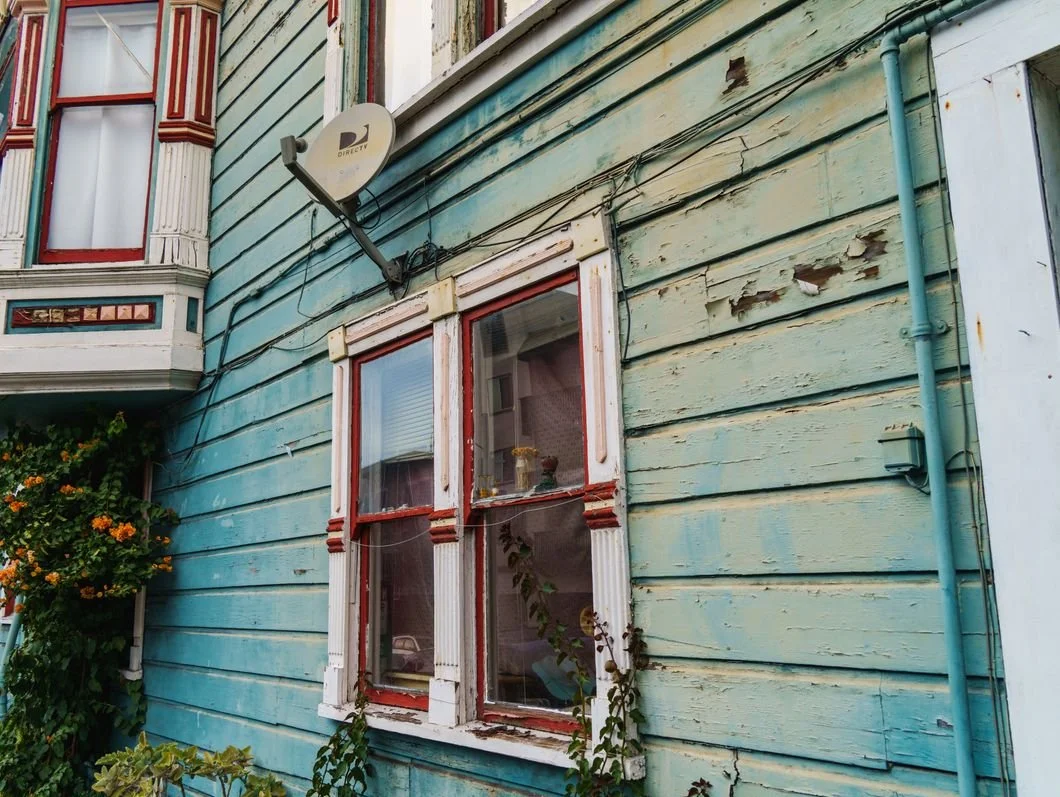
Photo by Robert So
Most homeowners do not notice exterior paint wear all at once…
Instead, they notice one side first.
Maybe the front still looks presentable, but the back of the house has started to fade. The sunny elevation appears washed out in the afternoon light, while the shaded side is beginning to show mildew near the trim. One corner may be peeling sooner than the rest, a porch column looks tired, or a section of clapboard near the trees seems to hold moisture longer than it should.
At first, the wear can feel inconsistent, but it is usually not random.
A house does not age evenly…
It ages by exposure.
Every side of a home lives in a slightly different environment. One wall may take the strongest sun. Another may sit in shade for most of the day. One elevation may face wind-driven rain. Another may be protected by trees, roof-lines, or neighboring structures. For- properties closer to the water, salt air, humidity, and coastal storms can add another layer of wear.
This is why a good exterior painting plan begins with reading the house, not simply choosing a color.
The Sunny Side Fades First
The side of the house that receives the most direct sun is often the first place homeowners notice fading.
Strong sunlight affects color, especially deeper shades. Dark blues, charcoals, greens, reds, and rich browns can look beautiful on the right home, but they also absorb more heat and tend to reveal sun exposure more clearly over time. Even lighter colors can begin to lose their original clarity when they are exposed to long hours of direct sun season after season.
Sun does more than fade color. It also heats the surface of the siding, trim, and painted details. As materials warm and cool, they expand and contract. Over time, that movement can contribute to cracking, checking, or areas where older paint begins to lose its hold.
On a Fairfield County home, the sunny side may look cleaner at first glance because it dries quickly after rain. But that same exposure can slowly bleach the finish, flatten the color, and make the paint appear tired before the rest of the house catches up.
The Shaded Side Holds Moisture
The shaded side tells a different story.
Where the sunny side fades, the shaded side often holds moisture. This is especially true on homes surrounded by mature trees, tucked into wooded lots, or positioned where one elevation receives very little direct light.
Paint needs a surface that can dry properly. When siding, trim, or shingles remain damp for long periods, the conditions become more favorable for mildew, algae, staining, and peeling. The paint may not look faded in the same way, but it can begin to feel soft, dirty, or uneven. You may see discoloration near the lower boards, along trim, beneath gutters, or in areas where landscaping sits too close to the house.
This does not always mean the previous paint job failed. Sometimes it means the house is living in a damp micro-climate on that side.
That distinction matters.
A shaded elevation may need different preparation than a sunny one. Washing, mildew treatment, scraping, sanding, spot priming, and repair work may all vary from side to side. Treating every wall exactly the same can miss the actual condition of the house.
Trees Create Their Own Paint Environment
Trees are one of the great pleasures of many Fairfield County properties. They give older homes shade, privacy, proportion, and a sense of being settled into the landscape.
They also change how exterior paint wears.
Branches can keep sections of the house in shade. Leaves drop debris into gutters and roof-lines. Pollen collects on siding and trim. Sap, moisture, and organic material can stain painted surfaces. Areas close to shrubs or overgrown foundation plantings may receive less air circulation, which slows drying after rain.
This is especially important around corners, dormers, porches, lower siding, and trim near garden beds.
A house surrounded by trees may need more than a standard wash before painting. It may need careful attention to staining, mildew, soft wood, open joints, and places where moisture has been sitting longer than the homeowner realized.
Exterior painting is often as much about correction as color.
Water-Adjacent Homes Have Their Own Conditions
Homes closer to Long Island Sound experience another version of exposure.
In Greenwich, Old Greenwich, Riverside, Cos Cob, Stamford, and Darien, water-adjacent homes may deal with stronger humidity, salt air, wind-driven rain, and seasonal storms. Even when the house is not directly on the shoreline, proximity to the water can influence how exterior materials weather.
Painted trim, railings, doors, shutters, and siding may show wear differently in these environments. The issue is not always dramatic. Sometimes it appears gradually: a little more swelling around joints, faster dulling on exposed trim, mildew in protected corners, or peeling where moisture repeatedly finds a weak point.
This is one reason preparation matters so much near the water.
The finish coat is only as good as the surface underneath it. If old paint is loose, wood is damp, caulk has failed, or salt and grime have not been properly removed, even a beautiful color will struggle to perform.
Cedar Shingles Need a Different Eye
Cedar shingles and shingle-style homes are part of the visual language of coastal New England and Fairfield County. They can look refined, relaxed, traditional, or quietly luxurious, depending on the architecture and finish.
But cedar also changes with exposure.
One side may weather to a soft gray. Another may darken under trees. A sunnier elevation may dry faster and appear lighter. A shaded side may hold moisture and show staining. Painted or stained cedar can reveal uneven wear because the material itself responds to sun, shade, humidity, and age.
This is why cedar should not be treated as if it were ordinary siding.
Before repainting or staining cedar shingles, it is important to look closely at condition, absorption, previous coatings, moisture patterns, and the way each elevation has weathered. Some areas may need more cleaning. Others may need spot priming or more careful repair. In certain cases, the goal may be to preserve the character of the shingles rather than force the entire house into an overly uniform appearance.
With cedar, good judgment matters. The house may not need to look brand new, instead it may need to look cared for, balanced, and properly protected.
The Same Color Can Look Different Around the House
Exposure does not only affect how paint wears. It also affects how color appears.
The same exterior color can look warm on one side of the house and cool on another. A white may feel crisp in shade but almost glaring in full sun. A gray may turn blue on a north-facing elevation. A green may disappear into the surrounding trees. A dark color may look elegant on the front of the home and heavier on a shaded side.
That is why exterior color selection should be tested around the house, not only near the front door.
A few targeted considerations can make a major difference:
Full sun: colors may appear lighter, brighter, and flatter.
Deep shade: colors may read cooler, darker, or more muted.
Tree cover: greens, browns, and grays may shift depending on the landscape.
Water proximity: whites, blues, grays, and natural tones may change under brighter coastal light.
Older trim: the wrong white can make historic details feel harsh instead of refined.
Cedar shingles: stain, paint, and natural weathering should be considered in relation to the whole house, not one sample board.
The best exterior color is not only the one that looks good in theory.
It is the one that holds up visually across all sides of the home.
A Better Paint Plan Starts With Reading the House
Exterior painting is not one uniform action applied to four identical walls. A good painter looks at the house elevation by elevation.
Where is the sun strongest? Where does moisture linger? Where are the gutters spilling? Where is the trim failing? Where has the previous coating held well, and where has it broken down? Where are trees, shade, wind, water, and architecture changing the condition of the surface?
Those answers shape the work.
One side may need more sanding. Another may need mildew treatment. A weather-facing elevation may need extra attention to caulking and priming. Trim near roof-lines, doors, windows, and porches may need more detailed prep than the broader siding. Cedar shingles may require an even more careful approach based on age, finish, and exposure.
This is the difference between simply repainting a house and properly maintaining its exterior.
Exterior Painting for Fairfield County Homes
At Stanwich Painting, we understand that Fairfield County homes age by exposure. Sun, shade, trees, moisture, salt air, cedar shingles, older trim, and coastal weather all influence how exterior paint performs over time.
That is why our exterior painting process begins with careful observation and preparation. Before recommending a finish, color direction, or project plan, we look at the condition of the home itself: the siding, trim, previous coatings, moisture patterns, and the way each side of the house has weathered.
Whether your home is in Greenwich, Cos Cob, Riverside, Old Greenwich, Stamford, Darien, New Canaan, or Wilton, a thoughtful exterior painting project should do more than refresh the color. It should protect the house, respect its architecture, and respond to the conditions it actually lives in.
Because a house does not age evenly. And the best exterior paint work understands why.
Stanwich Painting proudly provides top-quality residential painting services throughout Fairfield County, including: Greenwich, Cos Cob, Riverside, Old Greenwich, Stamford, Darien, New Canaan, and Wilton