
The Turkey Tints: A Painter’s Guide To The Colors Hiding In Your Thanksgiving Table
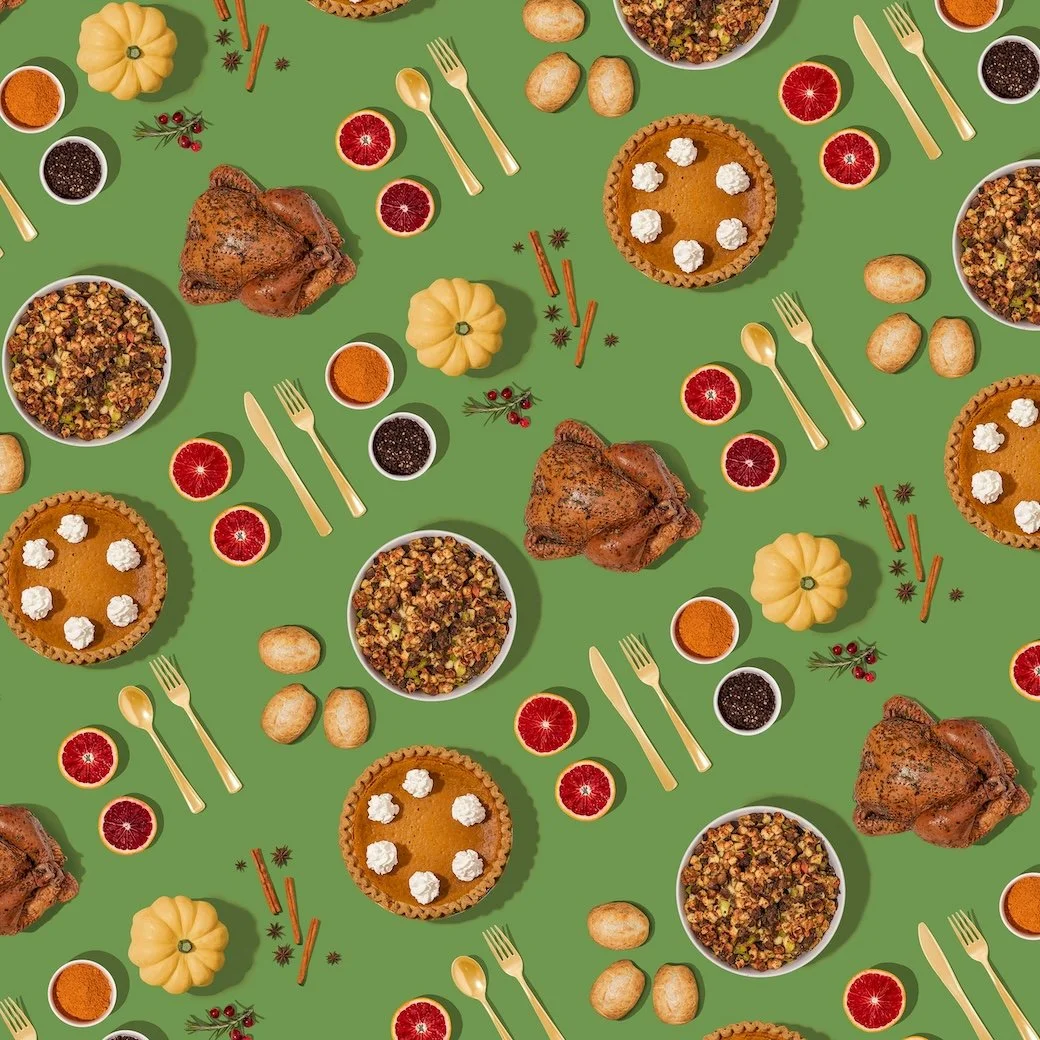
Photo by Shamblen Studios on Unsplash
Every Thanksgiving table is a quiet spectacle of color theory, not in the curated, lifestyle-bloggy way, but in the unintentional brilliance of cranberry sauce gleaming like lacquer, mashed potatoes collapsing into velvet matte, and the golden-brown topography of a well-roasted turkey holding more undertones than most paint decks dare to admit.
What designers chase all year—depth, sheen, warmth, texture—appears effortlessly on the table around 4 p.m. on the fourth Thursday of November. If you pay attention, Thanksgiving dinner becomes a peculiar kind of seminar, teaching you more about paint than you’d expect from a meal that ends with everyone falling asleep in odd positions.
This is not a blog about fall colors. It’s a blog about food as accidental paint consultant, showing you how the finishes, textures, and hues of a holiday meal can spark ideas for your home—especially when winter light starts settling in.
Cranberry Gloss: The Accidental High-Gloss Masterclass
Cranberry sauce is the one moment of glamour at an otherwise cozy meal. It arrives on the table shimmering like it has somewhere else to be. It’s glossy, unapologetic, reflective, a little dramatic… and if the light hits it right, it behaves exactly like a luxuriously lacquered wall.
But here’s the secret: not everything is meant to be high gloss.
Gloss is gorgeous in theory and unforgiving in practice. Cranberry can pull it off because it has no dents, no patched seams, no toddler-height fingerprints. Most walls can’t say the same.
Still, if you’ve been tempted by the shine, cranberry gives you a clue about how to use it. High gloss is best in:
small, controlled spaces
places where you want movement in the surface
rooms with architectural interest rather than wear-and-tear
And if you want paint colors that echo cranberry’s richness — but without leaning into the expected “holiday red” category — try:
Farrow & Ball Radicchio No. 96 a cultivated, berry-red with sophistication
Benjamin Moore Dinner Party AF-300 deep, warm, indulgent without feeling seasonal
Cranberry’s lesson: use gloss sparingly, and let it sparkle where it counts.
Mashed Potatoes and the Soft Dignity of Matte
If cranberry is the diva, mashed potatoes are the diplomat. No shine, no flash: just velvety softness absorbing light like nothing else on the table. Their surface is the purest example of matte: quiet, forgiving, diffused.
Matte finish works best in rooms designed for calm. It softens harsh winter angles and gently mutes imperfections in older homes. You don’t notice matte walls at first glance, you just feel them.
For clean, soft, luminous mats, consider:
Benjamin Moore Alabaster OC-129 warm without yellowing
Benjamin Moore White Chocolate OC-127 soft but not sweet
Washable matte lines from Benjamin Moore or Sherwin-Williams for family-friendly durability
Mashed potatoes remind you that matte isn’t boring; it’s serenity, especially when the world gets louder in the colder months.
Dinner Rolls, Pie Crusts & the Architecture of Warm Neutrals
Every bread product on the Thanksgiving table—from dinner rolls to pie crusts—shares the same quiet talent: they’re subtle, warm, and foundational. They don’t dominate the plate. They hold the entire meal together.
The same is true of the best neutrals.
A great neutral is never flat. It has undertones—warm wheat, toasted flour, buttered edges—small hints that make the whole room feel grounded instead of washed-out.
If you want neutrals inspired by the “baked” side of the table, look at:
Farrow & Ball White Tie No. 2002 soft cream with historical charm
Benjamin Moore Acadia White OC-38 warm without heaviness
Benjamin Moore Warmed Cognac AF-275 a deeper, pie-crust richness for accent walls or cabinetry
Bread tones are not beige. They’re structure. They bring a home into focus without drawing attention to themselves.
Herb Greens: The Quiet Workhorses of Color
Thanksgiving is a feast for the eyes, adorned with vibrant greens like green beans, sage stuffing, and thyme. These humble ingredients, often overlooked, contribute to the holiday’s balance and harmony.
Muted greens behave beautifully on walls because they feel grounded and timeless while still bringing a hint of life into the room. They’re earthy, herbal, atmospheric and they pair exceptionally well with warm neutrals and natural wood.
Consider these herb-inspired hues:
Benjamin Moore October Mist 1495 soft, airy, adaptable
Farrow & Ball Card Room Green No. 79 deeper, moodier, incredible in low light
Herbal greens teach you that color doesn’t need to be bold to be influential. It only needs to feel intentional.
Turkey Skin & Layered Depth (Neutral Undertones 101)
The turkey may not be glamorous, but it’s surprisingly instructive. Its surface is complicated: golden in some places, deeper bronze in others, with warm undertones that shift under the dining room lighting.
This is exactly how complex neutrals behave on walls.
The best warm neutrals—the ones that feel rich rather than dated—echo this layered, roasted quality. They pick up light in some places and sink into shadow in others.
If you want neutrals with that kind of depth and nuance, look to:
Benjamin Moore Honeymoon AF-345 a warm neutral with beautiful undertones
Benjamin Moore Desert Tan 2153-50 subtle, earthy, flattering in winter light
Turkey skin teaches one of the most important color truths: undertones matter more than the color name.
Beauty Exists in Unlikely Sources
Thanksgiving tables are full of unintentional design wisdom, even though no one sits down thinking about paint colors. Gloss, matte, warmth, depth, subtle color, and saturation—all these elements are baked, simmered, and roasted into forms we instinctively understand.
It serves as a reminder that color inspiration doesn’t have to be grandiose or meticulously curated. Sometimes, it’s right in front of us, radiating warmth under a dining room chandelier while the family engages in a heated debate about who’s taking home leftovers—or politics.
Your home doesn’t need a full seasonal rebrand, but it might welcome a fresh coat of something that feels as comforting as mashed potatoes, as warm as pie crust, or as quietly confident as herb green.
And when you’re ready, Stanwich Painting is here to help turn those unexpected color moments into something beautiful on the walls that shape your life.