
The Psychology Of Messy Walls: What The Scribbles, Smears, And Dents Really Mean
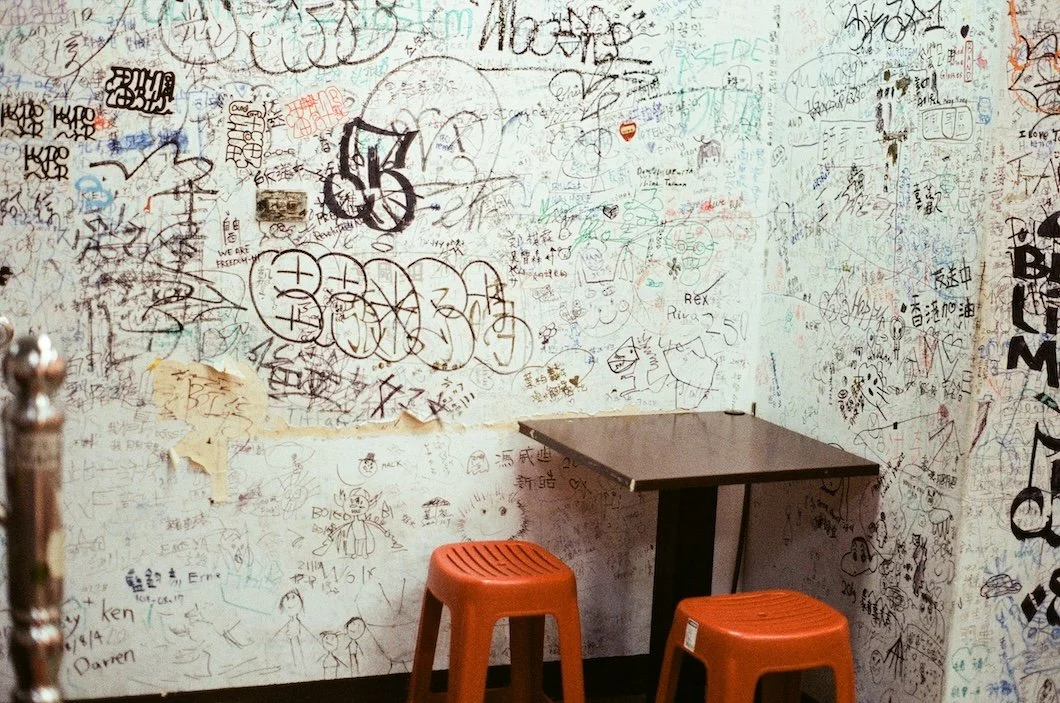
Your walls have seen more than you think.
They’ve survived toddlers at full velocity, juice-box catastrophes, the era when your child believed markers were “washable” simply because the package said so, and that dramatic growth spurt when backpacks suddenly doubled in size and impact. They’ve endured fingerpainting without paper, scooters indoors, enthusiastic dogs, endless stairwell traffic, and the mysterious period when someone kept touching the walls with hands that were always—always—sticky.
And yet, for all the chaos, one thing is true:
Messy walls are not proof that your home is out of control…
They’re proof that it’s alive.
Before we talk about repainting, refreshing, or restoring…we have to talk about what these marks actually mean.
Because the truth is: the things we call “damage” often carry the most human stories.
Why Humans Leave Marks: A Quirky Mini-Psychology Lesson
People—especially children—use walls the way animals use instincts. We don’t always realize we’re doing it, but walls are interfaces: places to balance, places to slow down, places to map our movement.
Kids drag their hands along walls not because they’re trying to ruin your paint job, but because:
It helps them stabilize their bodies.
They’re learning texture, pressure, and resistance.
It gives them spatial feedback.
It’s grounding—literally.
Adults aren’t innocent. We run our fingers along corners, lean against walls when we think, brace ourselves on doorframes, tap our nails against trim, and fidget with the banister with a kind of unconscious affection.
Walls are the surfaces we interact with the most without noticing. So it makes sense that they accumulate evidence of living.
It’s not just physics; it’s psychology and humanity in motion.
The Symbolism of Specific Chaos
Let’s be honest: not all wall marks are created equal. Some are irritating. Some are oddly endearing. Some are so baffling they deserve their own documentary series.
And each tells a different story.
The Crayon Sigils
You know them. Small artists at work. A looping constellation of circles, figures, and the occasional “S” shape that looks suspiciously like a snake.
This is territorial expression—the modern version of cave paintings. Children claim the space by marking it. They’re not being destructive. They’re saying: I was here. I’m learning. I’m expressing myself.
And while the hallway wall may not be the ideal gallery, the impulse itself is deeply human.
The Mystery Smears
Every home has one: a peculiar smear at toddler-height with no clear origin story. Jam? Dirt? Applesauce? Ghost? No one knows.
These smears are energy signatures—evidence of speed, curiosity, distraction, excitement, or mid-snack enthusiasm. They are the marks of a home that’s been used, loved, lived in.
They’re also the clearest sign that your walls have moved from decor to duty.
The Stairwell Fingerprint Trail
This is the unintentional growth chart of childhood. A slow, steady diagonal of fingerprints traveling upward every year.
Kids use walls to steady themselves as they climb—and the gradual rise of those smudges tells a story of bodies getting taller, stronger, more confident.
Some parents wipe them constantly. Others let them stay awhile because they can’t quite bring themselves to erase them. Both reactions make perfect sense.
The Corner Dents, Doorframe Chips, and Backpack Scars
These marks on the walls are a testament to the energy that flows through our homes. They come from various sources, such as running late, running fast, and even carrying sports equipment through the hallways. Backpacks that double as swinging weapons and elbows that never learned spatial diplomacy also leave their mark.
Dents serve as structural confessions, revealing the presence of people who are trying, learning, moving, and growing.
And yes, chaos is a part of it all.
Why Repainting Isn’t Erasing—It’s Evolution
Here’s where many homeowners get stuck:
They hesitate to paint because they don’t want to paint over memories.
This is real. You’re not imagining it. People genuinely carry emotional attachment to physical marks. Even dents can hold meaning.
But here’s the truth:
Repainting isn’t erasing the story. It’s preparing the walls for the next chapter.
Just as children outgrow shoes, beds, toys, and phases, homes evolve too. Walls aren’t sacred archives—they’re canvases that carry us from one season of life to another.
A fresh coat doesn’t remove the past, it simply gives your future a clean surface to land on.
Imagine taking a deep breath or resetting a room’s energy. It’s like acknowledging that time has moved on and something fresh is about to begin.
Making Peace With Flawed Walls (And What To Do About Them)
Your walls aren't failures. They’ve done their job beautifully.
They absorbed the impact, so you didn’t have to. They also absorbed the fingerprints, allowing your home to be lived in. Furthermore, they’ve preserved the most unfiltered form of family life.
But they do eventually need help.
Here’s how to refresh without losing the soul:
Forgive the Walls
Literally.
Say it out loud:
“They did their best.”
This might be the only home design blog that tells you to express gratitude toward drywall, but trust us—it's deserved.
Choose Finishes That Embrace Reality
Not every home needs museum finishes. In fact, most shouldn’t.
For high-traffic or kid-powered zones:
Washable matte (Benjamin Moore Scuff-X, Sherwin-Williams Emerald Matte)
Offers elegance + durability without the old-school sheen.Eggshell
Slightly easier to clean, good for hallways.Satin for trim
Holds up against repeated impacts from toys, shoes, or life.
Your walls should look beautiful, yes—but they should also be resilient.
Choose Colors That Hide Evidence Without Feeling Heavy
Mid-toned hues help soften imperfections while adding warmth and sophistication.
Think:
warm taupe
gentle olive
mushroom greige
moody-but-soft blues
dusty greens
anything with depth that still feels breathable
These tones aren’t hiding the past—they’re reframing it.
Prep Matters Even More When Your Walls Have Lived Hard Lives
This is where craftsmanship counts.
A home whose walls have “seen things” requires:
careful sanding
patching
re-caulking trim
smoothing irregularities
priming as needed
The goal is not to pretend nothing ever happened, but rather to give the wall its dignity back.
Stanwich Painting specializes in that kind of respect.
From Chaos to Calm Without Losing Soul
A freshly painted room can genuinely transform the psychology of a home. Children behave differently in refreshed spaces, while adults breathe differently. Rooms feel bigger, lighter, and calmer.
The clutter feels less overwhelming, and the home feels more intentional and less reactive.
Paint is subtle, yet it has a profound impact. It’s the easiest and most transformative reset a family can give itself. This isn’t because it hides the chaos—but because it contains it. Color becomes the pause between chapters, and every chapter deserves clarity.
Closing: Your Home Doesn’t Need to Forget Its History
Walls aren’t meant to serve as permanent memorials of childhood. Instead, they’re designed to temporarily hold stories before offering themselves up again—clean, open, and ready for new beginnings.
Your home is allowed to evolve, and your walls are allowed to rest. When they’re ready for renewal, Stanwich Painting is here to help make that transition graceful.
Your next chapter deserves fresh color.
Let’s begin with your free consultation.
Further Reading & Sources
Harvard Center on the Developing Child – A Guide to Executive Function
How kids develop planning, focus, self-control, and why everyday movement and routines matter so much.
https://developingchild.harvard.edu/resource-guides/guide-executive-function/Scientific American – “Sensing with Your Feet!”
A playful, accessible explainer on how the brain processes touch and bodily awareness — great context for why humans constantly seek contact with surfaces.
https://www.scientificamerican.com/article/sensing-with-your-feet/Journal of Environmental Psychology – “Effects of indoor color on mood and cognitive performance”
Classic research on how interior colors affect mood and mental performance in everyday spaces.
https://www.sciencedirect.com/science/article/abs/pii/S0360132306002289Research Trends Journal – “The Psychology of Colours in Interior Spaces” (PDF)
A more recent look at how different interior color palettes shape mood, productivity, and well-being at home.
https://researchtrendsjournal.com/uploads/articles/Sp-2-6-41.1.pdfSally Augustin – Place Advantage: Applied Psychology for Interior Architecture
Applied environmental psychology for designers and homeowners: how color, texture, layout, and light shape how we feel in a room.
https://www.amazon.com/Place-Advantage-Psychology-Interior-Architecture/dp/0470422122Psychology Today – “Does Clutter Inhibit Creativity?”
A readable overview of research on mess, order, and creativity — nice companion to the “lived-in” vs. “perfect home” theme.
https://www.psychologytoday.com/us/blog/rethinking-mental-health/202104/does-clutter-inhibit-creativityPsychology Today – “Clutter Is Children’s Creative Play”
Explores how “mess” and scattered objects support symbolic play, flexible thinking, and development in children.
https://www.psychologytoday.com/us/blog/smart-families/202209/clutter-is-children-s-creative-playOhio State University – “Household chaos may be hazardous to a child’s health”
A research summary on how chaotic, disorganized environments correlate with stress and health in children — good counterpoint to the “healthy mess vs. total overwhelm” idea.
https://ehe.osu.edu/news/listing/household-chaos-may-be-hazardous-child-s-health