
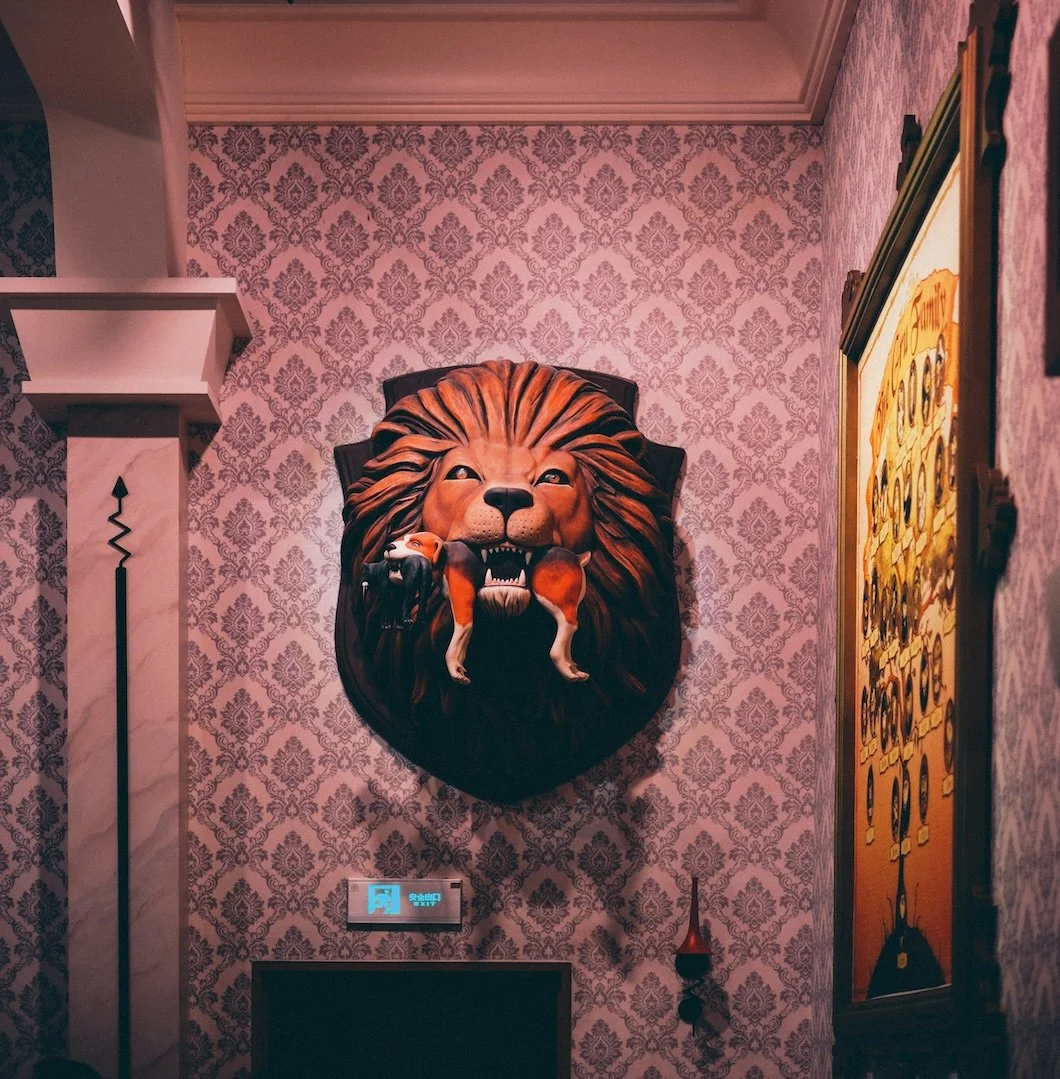
Photo by tommao wang on Unsplash
Every house has a room that doesn’t fully belong to the rest of it.
It isn’t the room shown first when guests arrive. It doesn’t appear in listing photos or sit neatly within the language of “open concept” living. It may not even have a clearly defined purpose. But somewhere inside many homes—often slightly removed from the center of activity—there is a room that operates by different rules.
Not a meditation room. Not a home gym. Not even that carefully branded “wellness” space. And it’s definitely not a room designed to look good on Instagram. Instead, it’s simply a room that belongs completely to the person who uses it.
These rooms rarely begin intentionally. More often, they develop gradually, changing shape over time until they become something distinct from the rest of the house.
A spare bedroom becomes a reading room. A back sitting room slowly fills with objects that never found a place elsewhere. A small upstairs room with uneven light becomes the space where someone drinks coffee in the morning, folds laundry in the afternoon, or disappears for an hour at the end of the day.
There’s usually a chair that doesn’t match anything else in the house, a lamp moved there years ago because the light felt softer, books stacked without styling, and a blanket left folded over the same armrest for months.
Nothing about the room feels overly designed, which is often why it works so well.
Modern interiors tend to reward purpose. Rooms are expected to explain themselves immediately.
The kitchen should feel polished. The living room should feel cohesive. Bedrooms should appear calm and intentional. Every space is expected to communicate its purpose quickly, both visually and functionally.
Much of contemporary design is built around legibility. You should understand a room at a glance.
But the rooms that people often return to most are not always the ones that make the strongest first impression.
They’re the rooms that gather meaning gradually.
A room that defies trends rarely stays fixed. Furniture shifts over time, not because of a redesign but because habits change with the season.
A chair moves closer to the window during winter when daylight feels limited. A small table drifts into another corner. Curtains remain open longer in spring, while lamps become more important as late autumn darkens the room earlier each evening.
The room evolves through habit rather than planning, responding to how someone actually lives instead of how the house is expected to perform.
That’s part of what makes it difficult to define. It isn’t carefully curated so much as slowly accumulated, shaped by repetition, comfort, and instinct.
These rooms also tend to resist perfection.
They’re not trying to coordinate every material or maintain a consistent aesthetic language. Colors may not match perfectly. Furniture may come from different periods. The room may carry things that would feel misplaced elsewhere in the house.
And yet, the lack of precision often creates something more believable.
Because lived-in rooms rarely operate through symmetry, instead they operate through familiarity.
You know where the chair sits because it has always sat there. You know how the light falls across the wall at a certain time of day. You know which corner feels best in winter and which one becomes too warm by midsummer. The room develops memory.
This is also where color behaves differently. Trend-driven interiors often rely on a broad agreement of colors that feel universally acceptable, adaptable, easy to photograph and easy to resell.
But rooms that exist outside those expectations tend to allow more personal decisions.
The paint doesn’t need to appeal to everyone because It only needs to feel right within that space. A darker tone that might feel too heavy in a formal living room suddenly works because the room is smaller and quieter. A muted color that would disappear in a larger space begins to feel grounding rather than subtle. The relationship between color and function changes. Paint stops acting like a statement and becomes atmosphere.
These are often the rooms where less predictable colors succeed.
A deep, smoky blue like Benjamin Moore’s Hidden Sapphire can feel surprisingly calm in a small reading room where natural light shifts throughout the day. Farrow & Ball’s Brinjal introduces a kind of quiet richness that works particularly well in spaces that are used privately rather than socially.
Even softer, earthier tones—Benjamin Moore’s Knoxville Gray, Farrow & Ball’s Pigeon, or Red Earth—carry a sense of personality that feels less tied to trend and more tied to mood.
None of these colors ask to dominate. They settle into the room. And over time, they begin to feel inseparable from it.
There’s also something slightly resistant about these spaces: they exist outside the pressure to optimize every square foot.
Modern homes increasingly ask rooms to justify themselves. A room should be productive, flexible, entertaining, photogenic, or multifunctional. Every space must explain why it exists.
But some rooms don’t need to explain themselves. They simply become part of a person’s private geography. A place returned to without much thought. A room used differently in January than in July. A space that collects habits rather than attention.
In older homes, these rooms appear naturally. A narrow sitting room beneath the stairs. A former sewing room. A small enclosed porch. A room at the back of the house where the light behaves differently than everywhere else. They often feel disconnected from the main flow of the home. And because of that, they become more personal…
There’s less expectation. Less performance.
The room doesn’t need to represent the house. It only needs to hold the person who uses it.
What makes these spaces memorable is not that they are beautiful in a conventional sense. It’s that they feel honest. They reveal how someone actually lives: the objects that remain, the colors that stay and the furniture that never gets replaced because it somehow belongs exactly where it is.
Trend-proof rooms are rarely designed. They evolve.
And in that evolution, they become difficult to replicate.
There’s a reason people often remember these rooms more clearly than the larger, more finished spaces in a house. It isn’t because they’re impressive in a conventional sense, but because they feel inhabited.
They hold evidence of routine, comfort, privacy, and repetition. The room doesn’t ask to be admired or explained; it simply becomes a place that draws someone back, again and again, without requiring much justification.
In a culture increasingly built around visibility, there’s something refreshing about a room that exists without audience.
A room that changes with the seasons. A room where furniture shifts without explanation. A room painted in a color that makes sense only to the person who lives with it.
It may not photograph well. It may not fit the language of trends. But it often becomes the room people understand most deeply.
Not because it was carefully designed, but because it was allowed to become itself.
Ready to Help
If you’re considering a room that feels more personal, layered, or less tied to trend, paint often becomes the foundation for that atmosphere.
At Stanwich Painting, every project begins with a detailed estimate that outlines preparation, materials, and the full scope of work before anything begins. That clarity allows color to feel intentional, responsive, and aligned with how the room is actually lived in.
Schedule a consultation or call 475-252-9500.
Stanwich Painting proudly provides top-quality residential painting services throughout Fairfield County, including: Greenwich, Cos Cob, Riverside, Old Greenwich, Stamford, Darien, New Canaan, and Wilton