
The Forgotten Parts of the Property
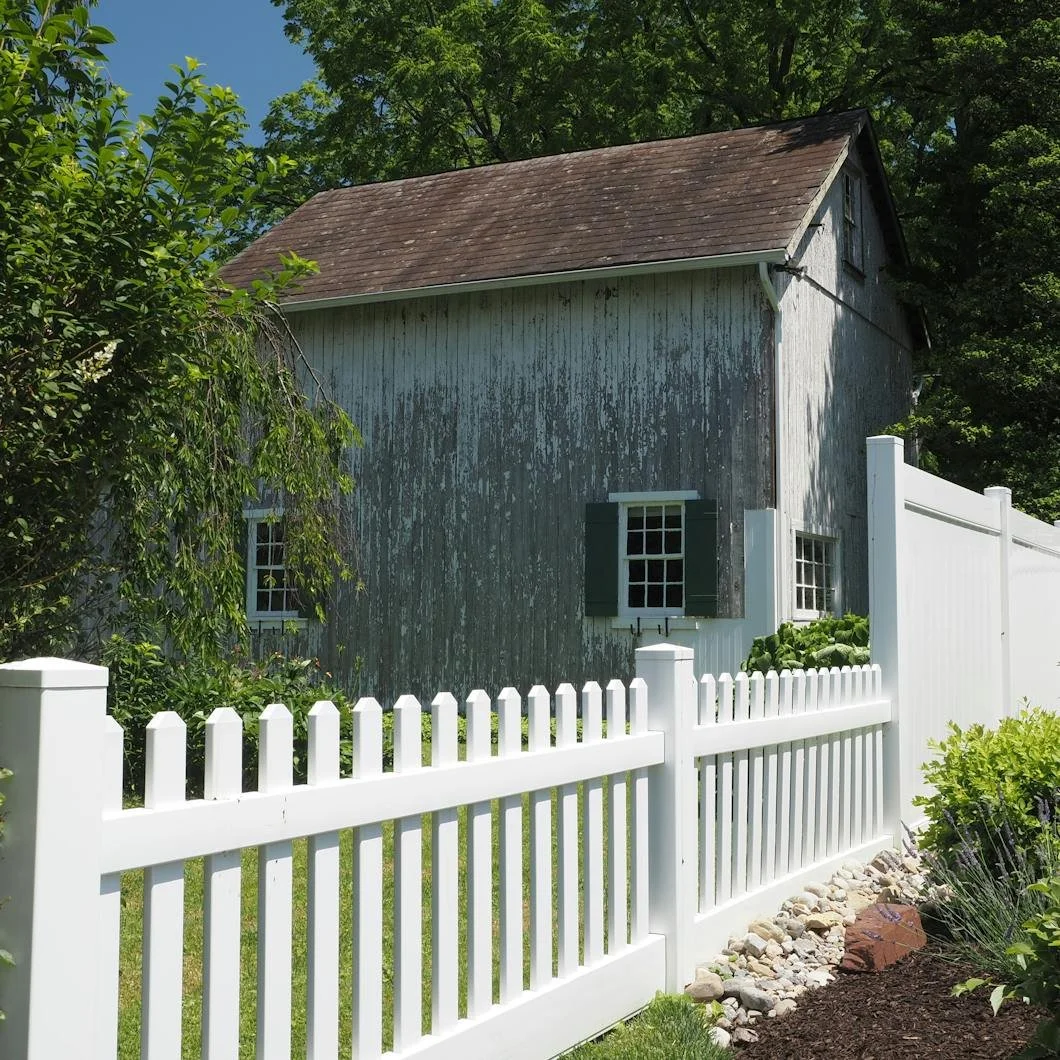
Photo by Gene Samit
When spring arrives, the boundaries of a property begin to feel larger again.
During winter, attention narrows. You move through the same entry points, follow the same paths, and spend less time beyond the immediate footprint of the house. Landscaping fades into the background, detached structures become less visible, and the outer edges of the property recede from daily awareness.
Then the season changes.
The yard becomes usable again. Light lingers longer in the evening. Trees thin just enough to reveal what had quietly disappeared behind them. You begin walking farther—past the side garden, toward a detached garage, along a fence line you haven’t followed in months. A carriage house behind the main structure suddenly feels present again, its exterior trim catching light differently than it did last fall. A small bridge crossing a low section of the yard becomes noticeable in a way it wasn’t during winter.
And that’s often when certain things begin to stand out. Not because they changed dramatically over the colder months, but because they were never part of the regular line of sight to begin with.
Older properties rarely exist as a single structure. They function more like a collection of connected pieces.
Detached garages, garden sheds, decorative fencing, pergolas, railings, and secondary entrances all become part of the larger composition of the property, along with exterior trim that wraps around lesser-used elevations of the house and small outbuildings that may no longer serve their original purpose but still contribute to the identity of the landscape.
These structures often age differently than the main house—not because they’re built differently, but because they occupy a different place in the hierarchy of attention.
The main house receives care first. It’s painted first, repaired first, and maintained more consistently because it remains central to everyday life. It carries the visual responsibility of the property, so naturally, it stays in focus.
The outer structures wait. And over time, waiting becomes separation.
That separation rarely appears all at once. It develops gradually, in ways that are easy to overlook because they happen over years rather than seasons. Paint weathers at a different pace. Trim details lose some of their sharpness. A structure that once felt integrated into the larger property begins to sit slightly outside the rhythm of ongoing upkeep.
Nothing collapses. Nothing ever becomes unusable. But something subtle begins to shift in how the property feels as a whole.
This is especially noticeable on homes with architectural detail, where the visual language of the property extends well beyond the main façade. Italianate brackets, Second Empire moldings, decorative fascia boards, repeated window trim, and exterior woodworking create continuity across multiple structures, allowing the property to read as a single composition rather than a collection of unrelated buildings.
These details were never intended to exist in isolation. They repeat intentionally, creating echoes from one structure to another.
A bracket beneath a roofline may appear again on a detached garage or carriage house. The proportions of a window casing may repeat across separate elevations. A trim profile used prominently on the front façade may quietly continue around a side building or smaller structure farther back on the property.
That continuity matters more than most homeowners realize.
Architecture is often experienced subconsciously. You may not notice every molding or fascia board individually, but you register when those relationships begin to weaken. A property rarely loses cohesion because one thing looks obviously bad. It loses cohesion when the connections between structures no longer feel aligned.
The house still functions—but it no longer feels fully composed.
Spring tends to make this easier to recognize because the season restores movement to a property. You spend more time outdoors, moving beyond the driveway and front entry as landscaping returns, light shifts, and long-neglected pathways become active again.
As that movement expands, relationships between structures become easier to read. The main house may still feel crisp and well-maintained, while a smaller building farther back begins to show a softer edge. A pergola that once felt integrated now appears weathered in a way that no longer matches its surroundings. Decorative trim on a secondary elevation may carry more peeling paint than the rest of the home.
The differences are rarely dramatic; instead, they quietly reveal themselves through subtle contrast.
One structure holds its definition while another quietly loses it. And once that contrast becomes visible, it begins to change how the property is experienced.
Stanwich recently encountered this during a consultation. The main house had been maintained carefully over time. The paint held. Architectural details remained sharp and intact. But farther back on the property sat a carriage house that had slowly drifted into a different condition.
The difference wasn’t severe. It was cumulative. Trim details had softened. Moisture had begun working into exposed areas. Paint failure wasn’t dramatic, but it was gradually enough to change how the structure related to the rest of the property.
Nothing looked neglected…
But it no longer felt connected. And that distinction matters.
Many of these structures aren’t forgotten because homeowners stop caring about them. They’re overlooked because they’ve become less central to daily routine. A small outbuilding that once served a practical purpose becomes storage. A detached garage stops housing vehicles. A bridge or gate becomes part of the scenery rather than part of movement through the property.
The structure remains. Attention simply shifts elsewhere, and the subtle decline follows.
This is often where exterior painting becomes less about routine maintenance and more about restoring a sense of relationship.
Paint reconnects surfaces and renews their dialogue. It restores clarity where long exposure to weather has softened detail and eroded crisp edges. It reinforces architectural continuity across separate buildings and helps smaller elements relate back to the main structure. It allows secondary structures to sit comfortably within the same visual conversation as the house itself, preserving a unified presence.
This matters particularly on older homes, where architectural detail carries much of the property’s character. Exterior woodworking rarely functions as decoration alone; it shapes proportion, shadow, depth, and rhythm. It
Spring also changes how the property is lived in.
Winter compresses activity toward the center of the house. Warmer weather pushes it outward again. Garden paths become active. Side entries are used more frequently. Detached buildings begin to feel like destinations rather than background scenery.
As the full footprint of the property returns, smaller architectural elements begin to matter more. Railings become part of movement through the landscape. A gate feels intentional again. A bridge crossing a landscaped dip or stream contributes to how the property unfolds rather than simply existing within it.
Individually, these details may seem secondary, but together, they shape how the property is experienced.
Exterior painting, when done thoughtfully, becomes less about individual surfaces and more about restoring continuity.
The goal isn’t simply to repaint an outbuilding. It’s to bring it back into alignment with the architectural language of the larger property. That may mean reinforcing trim lines that have softened over time, correcting uneven weathering, or creating consistency across structures that have slowly drifted apart.
The work itself is often subtle. But the result is noticeable.
A property begins to feel complete again—not because everything looks new, but because everything feels related.
The forgotten parts of a property are rarely forgotten forever. Spring has a way of returning them to view, not dramatically, but gradually, through changing light, renewed movement, and a wider awareness of how the property is actually experienced.
It becomes easier to remember that the house was never meant to stand alone. The carriage house behind the main structure, the detached garage, the railings, the trim details, and the smaller buildings sitting farther from immediate attention all continue to contribute to the larger story of the property.
These pieces don’t ask to become the focus. They simply ask to remain quietly connected to the whole, contributing their subtle presence to the overall composition.
And often, restoring that connection is what allows a property to feel complete again.
Ready to Help
If spring has you looking beyond the main house and noticing the structures that quietly support the property—carriage houses, exterior trim, railings, outbuildings, or architectural woodworking—thoughtful preparation and cohesive painting can bring those elements back into alignment.
At Stanwich Painting, every project begins with a detailed estimate that outlines preparation, materials, and the full scope of work before anything begins. That clarity ensures exterior work feels intentional, cohesive, and built to last across the entire property.
To schedule a consultation, visit or call 475-252-9500.
Stanwich Painting proudly provides top-quality residential painting services throughout Fairfield County, including: Greenwich, Cos Cob, Riverside, Old Greenwich, Stamford, Darien, New Canaan, and Wilton