
The Most Demanding Room In The House (And Why Paint Matters More There)
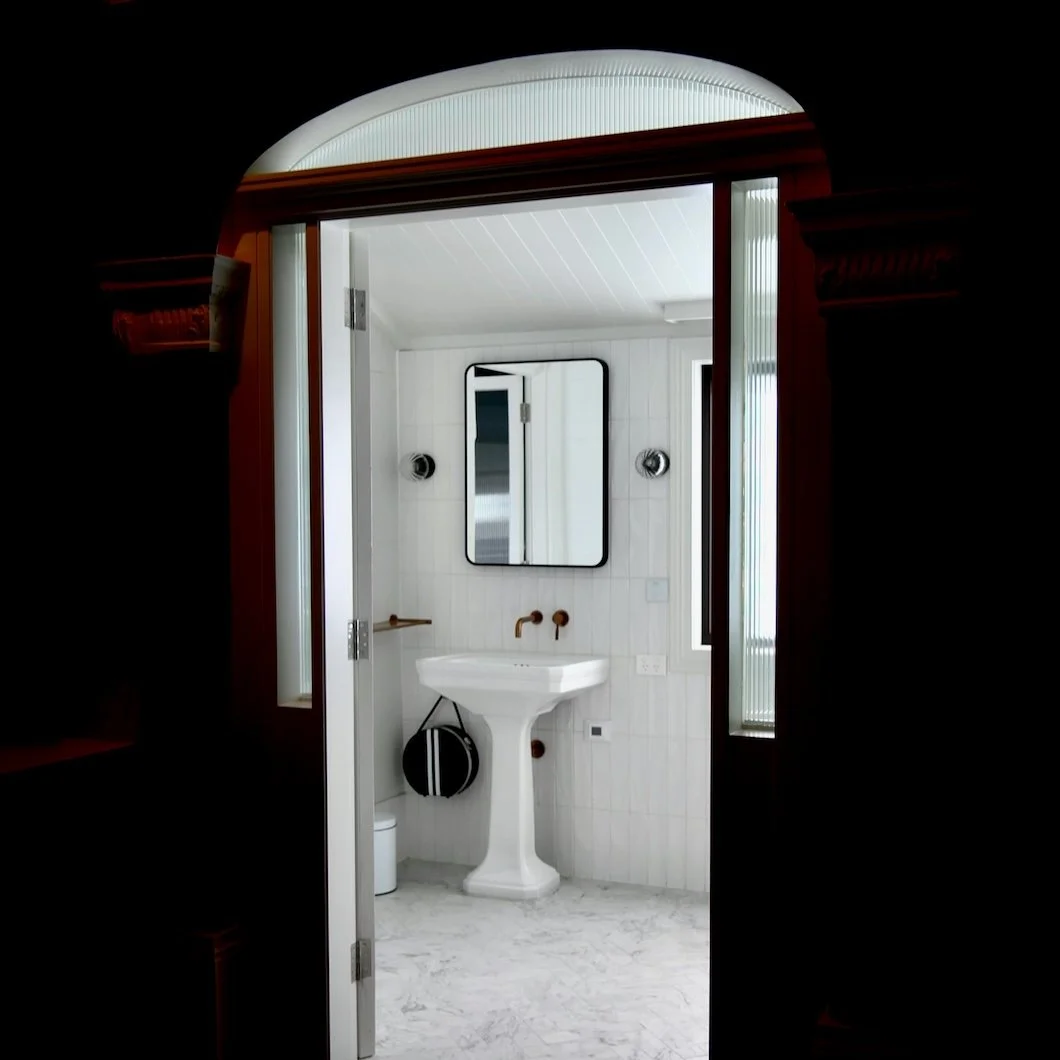
Photo by Kate Branch
Every room in a home asks something specific of paint. Living rooms rely on it to absorb time and traffic, bedrooms ask for quiet, kitchens ask for forgiveness. Bathrooms, however, require all of those things at once.
Bathrooms absorb moisture and heat, repetition and proximity, day after day. They hold the most private moments of the day and the most mechanical ones. And in winter, when routines narrow and mornings feel heavier, those demands become harder to ignore. A bathroom that felt acceptable in summer can suddenly feel compressed, tired, or quietly exhausting by January.
This isn’t about trends or dramatic upgrades. It’s about why bathrooms age faster than the rest of the house and why paint matters more here than anywhere else.
Bathrooms don’t benefit from distance. You’re always close to the walls. You see them first thing in the morning and last thing at night, often under unforgiving lighting and without the mental buffer of being fully awake. In a room viewed from two feet away, imperfections don’t hide. They linger.
Add daily steam, condensation, and temperature swings, and paint is under constant pressure. Even well-built bathrooms show it eventually: softening at seams, dulling finishes, corners that never quite dry the way the rest of the house does. What looks like minor wear is often cumulative stress.
Winter intensifies all of this. Showers run hotter. Windows stay closed. Air circulates less freely. Moisture lingers longer than it should. And the room you pass through multiple times a day begins to feel slightly out of sync with how you live now.
Not broken. Just past its moment.
In most rooms, paint is allowed to be expressive. In a bathroom, paint is infrastructure.
It has to tolerate moisture without sealing it in. It has to resist mildew without relying solely on additives. It has to adhere to surfaces that expand and contract subtly with heat. And it has to do all of this without asking for attention. When paint succeeds in a bathroom, you barely notice it. When it fails, it becomes impossible to ignore.
This is where shortcuts become visible.
Bathrooms are unforgiving of rushed preparation. Walls that weren’t properly cleaned, primed, or allowed to dry may look fine at first, but winter reveals their limits. Sheen breaks down unevenly, discoloration returns and corners soften. What seemed cosmetic turns…structural.
Good bathroom paint performance starts long before the topcoat goes on. It begins with respect for the room’s conditions: ventilation, surface temperature, airflow, and the way moisture actually moves through the space. Paint isn’t a fix on its own. It’s part of a system, and the system only works when each piece is doing its job.
Color tends to get the attention, but finish determines how a bathroom behaves.
For years, semi-gloss was the default solution: shine meant durability. Today, higher-quality eggshells and satins offer strong moisture resistance without the harsh reflectivity that can make small bathrooms feel brittle or cold. The shift isn’t just technical—it’s emotional.
Sheen shapes more than durability. It controls how moisture marks appear, how imperfections reveal themselves over time, and how the room feels psychologically. Highly reflective finishes can feel restless in a space built around quiet routines. They exaggerate movement, light, and wear. Lower sheens absorb light more gently. They soften edges, reduce glare, and create a sense of containment, something bathrooms benefit from, especially during long winter months.
The best finish doesn’t announce itself. It simply allows the room to settle.
Bathrooms are often described as “fresh” or “spa-like,” but those words rarely explain why a space actually works or why it doesn’t. They describe an aspiration, not an experience.
Bathrooms are transitional rooms. They hold private moments, daily resets, and small psychological shifts. They are the place where mornings begin and evenings wind down. Color here isn’t about stimulation. It’s about balance.
In winter, stark whites can feel sharper than intended. They exaggerate shadows and highlight wear. Cooler tones can lean sterile. Bright colors, once energizing, can feel loud against the quieter tempo of the season. What felt lively in July can feel demanding in January.
Muted, grounded colors tend to age better. Soft mineral tones, warm grays with depth, and restrained greens or blues reduce visual fatigue. They don’t demand a reaction; they support one. They create a backdrop that feels steady rather than insistent.
Darker colors, when chosen thoughtfully, can calm a bathroom rather than shrink it. They soften boundaries, reduce contrast, and make the room feel intentional instead of exposed. Darkness, used carefully, can feel protective.
The goal isn’t drama, it’s steadiness.
Winter doesn’t encourage renovation. It encourages recognition.
Life compresses inward. Mornings repeat themselves. Evenings slow down. Small irritations lose the cover of distraction. And because bathrooms are used so often—and so closely—they’re usually the first place homeowners notice that something no longer feels right.
This is why many repainting decisions are made in winter, even if the work happens later. Winter strips away excess and leaves only what you live with every day. It clarifies without demanding action.
Bathrooms don’t fail loudly. They quietly signal that better choices are possible.
Repainting a bathroom is one of the most efficient interior updates a home can make. It doesn’t require demolition. It doesn’t disrupt the rest of the house. And when done correctly, it changes daily experience in subtle but lasting ways.
The difference isn’t just visual. It’s how the room feels early in the morning. It’s how it holds steam without looking tired. It’s how surfaces age quietly instead of demanding attention. It’s the absence of friction.
Winter is well suited to this kind of work: thoughtful, contained and practical. Not because something is wrong, but because the room is finally being seen clearly.
Paint doesn’t need to transform a bathroom, instead all it needs to do is support it.
If a bathroom feels worn in winter, it’s rarely asking for a renovation. It’s asking for restraint, proper preparation, and paint decisions that understand the room’s demands.
When paint works hardest, it should feel like it’s doing nothing at all.
If your bathroom feels worn in winter, it’s usually not asking for a renovation — it’s asking for better decisions at the surface level. Thoughtful preparation, the right finish, and paint choices that understand the room can quietly change how the space feels every single day.
Further Reading: Bathroom Refresh & Design Inspiration
Bathroom Paint Colors & Inspiration — Benjamin Moore Explore a curated list of bathroom color ideas that range from soothing neutrals to bold palettes, with expert guidance on mood and scheme. 14 Bathroom Paint Colors | Ideas and Inspiration
20 Bathroom Paint Color Ideas — HGTV A mix of classic and contemporary paint color ideas to breathe new life into your bathroom, from calming shades to unexpected accents. 20 Bathroom Paint Color Ideas
24 Bathroom Paint Color Ideas for 2026 — The Coolist Fresh designer-curated color ideas for modern bathrooms — from soft, grounding hues to richer, moodier tones trending this year. 24 Bathroom Paint Color Ideas for 2026 Designers Are Switching To
Primary Bathroom Refresh Ideas — Most Lovely Things Real-world examples of a bathroom refresh where paint, lighting, mirrors, and hardware are used thoughtfully to update a space without a full renovation. Primary Bathroom Refresh: Small Ideas to Inspire
Best Bathroom Upgrade Ideas — Pennies for a Fortune A round-up of accessible updates (including color, hardware, accents, and finishes) that help elevate a bathroom without a major remodel. Best Bathroom Upgrade Ideas to Try