
Stop Designing For Other People: Making A Home That Feels Like You
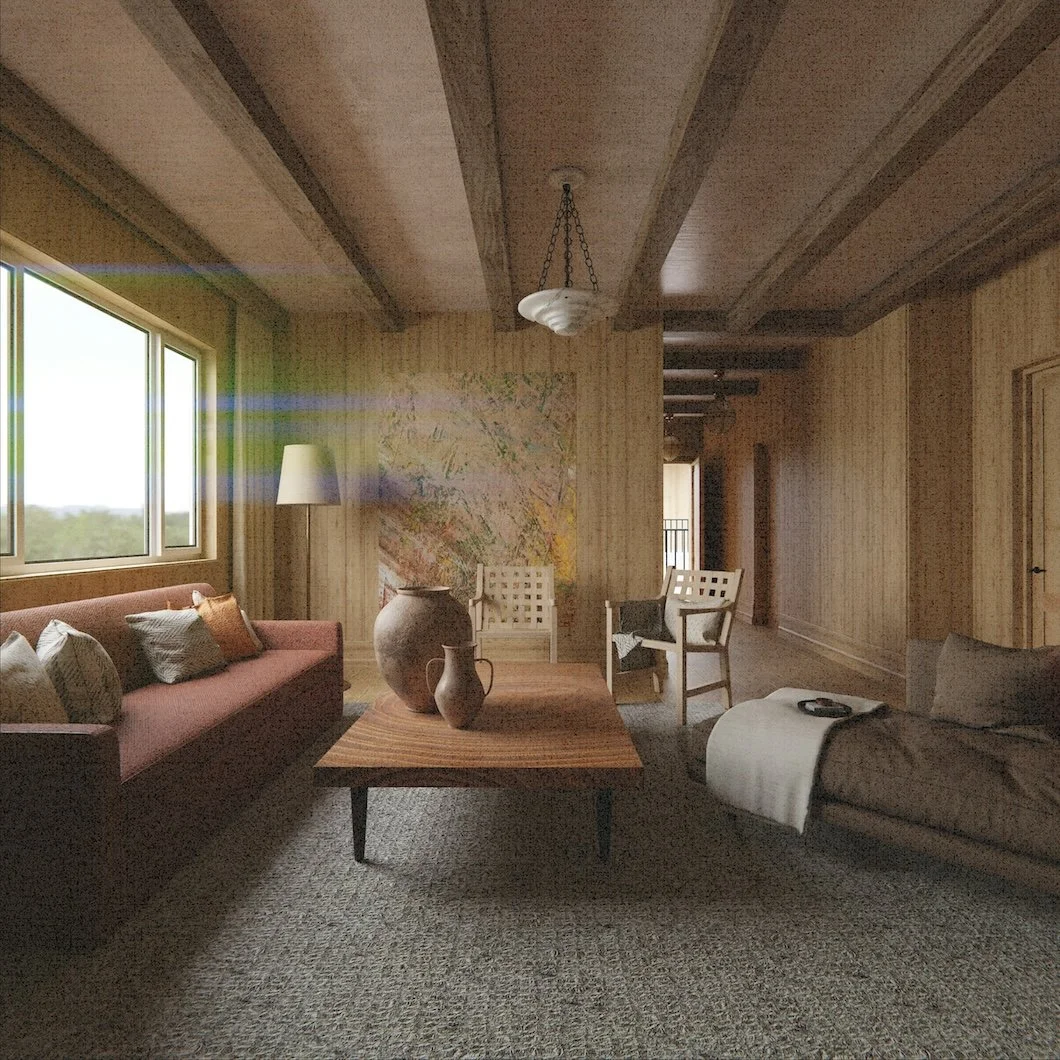
Photo by Puscas Adryan
The contemporary language of “inspiration” has undergone a quiet but consequential shift. What once implied curiosity, wandering, and the gradual formation of taste now more often functions as a form of visual consensus, a massive and ever-refreshing archive of rooms that present themselves as solved problems rather than particular responses to particular lives. The images are different, technically speaking, but the underlying grammar remains largely the same: familiar palettes, familiar proportions, familiar gestures, endlessly rearranged.
This does not happen because people lack imagination, nor because they are uninterested in originality. It happens because immersion shapes expectation. When we are exposed, day after day, to thousands of examples of what a “good” home supposedly looks like, the boundary between personal preference and cultural suggestion begins to erode. Over time, the question shifts almost imperceptibly from What feels right to me? to What will read as right?
Painting is often the first place this shift becomes visible. Color is immediate. It is immersive. It establishes atmosphere before furniture, before art, before even layout has had a chance to assert itself. It is also one of the most emotionally charged decisions a homeowner makes, precisely because it feels permanent enough to matter and flexible enough to doubt. In that tension, many people reach outward for confirmation. They look for palettes that have already been named, circulated, and approved, because choosing something that arrives with social validation feels safer than choosing something that originates privately.
Trends thrive in this psychological terrain. They offer not just ideas, but insulation. If a trending color or finish eventually feels wrong, the failure can be attributed to the moment rather than to oneself. The trend moved on. Tastes changed. No personal misjudgment required. This is a deeply human impulse. Most people are not trying to abdicate responsibility; they are trying to avoid regret.
But the avoidance of regret often produces a different kind of dissatisfaction.
Homes assembled primarily from borrowed taste tend to function well as images and less well as environments. They look coherent. They make sense. They demonstrate fluency in the current design language. And yet, many homeowners describe a lingering sense that their space does not quite feel like theirs, even after substantial investment. The rooms are pleasant, but impersonal. Attractive, but oddly mute.
What is missing in these spaces is rarely more design. It is recognition.
Recognition is the subtle but powerful sensation that a space reflects something true about the person living in it, not in a symbolic or performative way, but in a practical, lived way. It is the feeling that choices were made in response to internal reference points rather than external ones. Without that anchoring, a home can look resolved while still feeling uninhabited.
Designing from one’s own energy is an imprecise phrase, but it points toward something important. It does not mean identifying with a style category or locating oneself within an aesthetic taxonomy. It means paying attention to continuity. It means noticing what has persisted in your preferences across different phases of life, different homes, and different levels of exposure to design culture.
Most people can recall colors they have loved for years, long before they knew whether those colors were fashionable. They can recall spaces they felt at ease in, even if they could not articulate why. They can recall rooms that made them linger, and rooms they passed through quickly. These memories are not accidental. They reveal orientation.
Some people are oriented toward depth, shadow, and enclosure. Others toward openness, lightness, and air. Some gravitate toward softness and diffusion. Others toward clarity and contrast. These orientations are neither moral nor hierarchical. They are simply different ways of wanting to occupy space.
When paint choices are informed by this kind of self-observation, palettes tend to develop an internal logic that does not rely on trend alignment to feel coherent. The colors relate to one another because they are answering the same underlying questions about how a space should feel to inhabit. In this context, paint becomes less about decoration and more about environmental tuning.
Color establishes emotional temperature. Finish determines how that temperature is experienced. Placement governs rhythm. Together, these elements shape whether a room feels expansive or containing, calm or alert, heavy or buoyant. None of this requires a dramatic palette. It requires attentiveness.
Trend-driven palettes, by contrast, are often designed to register quickly. They communicate identity at a glance. They perform well in small doses and in photographs. But environments optimized for quick recognition can become tiring over long exposure. They ask to be noticed repeatedly. Orientation-driven palettes behave differently. They recede into daily life. Their success is measured not by initial impact, but by longevity of comfort.
Choosing in this way is not loud. It does not resemble rebellion in any theatrical sense. It is quiet, incremental, and largely invisible to anyone who is not living inside the space. But it represents a meaningful shift in agency: a decision to treat personal preference as a legitimate source of authority.
February, perhaps more than any other month, supports this kind of recalibration. It is a season with little spectacle. The distractions of open windows, blooming landscapes, and long evenings are absent. Life contracts inward through no philosophical effort of our own. In that contraction, people begin to sense their environments more acutely. They notice which rooms feel supportive and which feel restless. Which spaces invite pause and which seem to drain energy. These sensations are not mandates for immediate change. They are information.
February is not a month for wholesale reinvention. It is a month for noticing patterns and considering small, thoughtful adjustments. One room. One surface. One shift in tone, depth, or softness. Over time, these incremental choices accumulate into a home that feels increasingly aligned, not because it follows a coherent style, but because it follows a coherent sensibility.
Within this process, the role of a good painter is not to function as a trend interpreter. It is to function as a collaborator in discernment. Someone who can translate instinctive reactions into practical decisions. Someone who understands how color, finish, and placement alter atmosphere in real conditions. Someone who can slow the pace of choice just enough for clarity to emerge.
The strongest projects rarely begin with a catalog of desired outcomes. They begin with partial sentences. With hesitations. With descriptions that are more emotional than technical. These fragments often contain more useful information than any list of trending colors.
The most satisfying homes do not attempt to impress. They do not audition for approval. They feel specific in a way that is difficult to define and easy to recognize. You sense that choices were made deliberately, but not anxiously. That the space is not trying to demonstrate taste, but to support living.
That quality cannot be downloaded or replicated. It cannot be reverse-engineered from images. It develops slowly, through attention, trial, and a growing willingness to trust internal reference points.
Stop designing for other people.
Make a home that sounds like you.