
The History of the Paint Brush: How Traditional Brushwork Shaped Homes
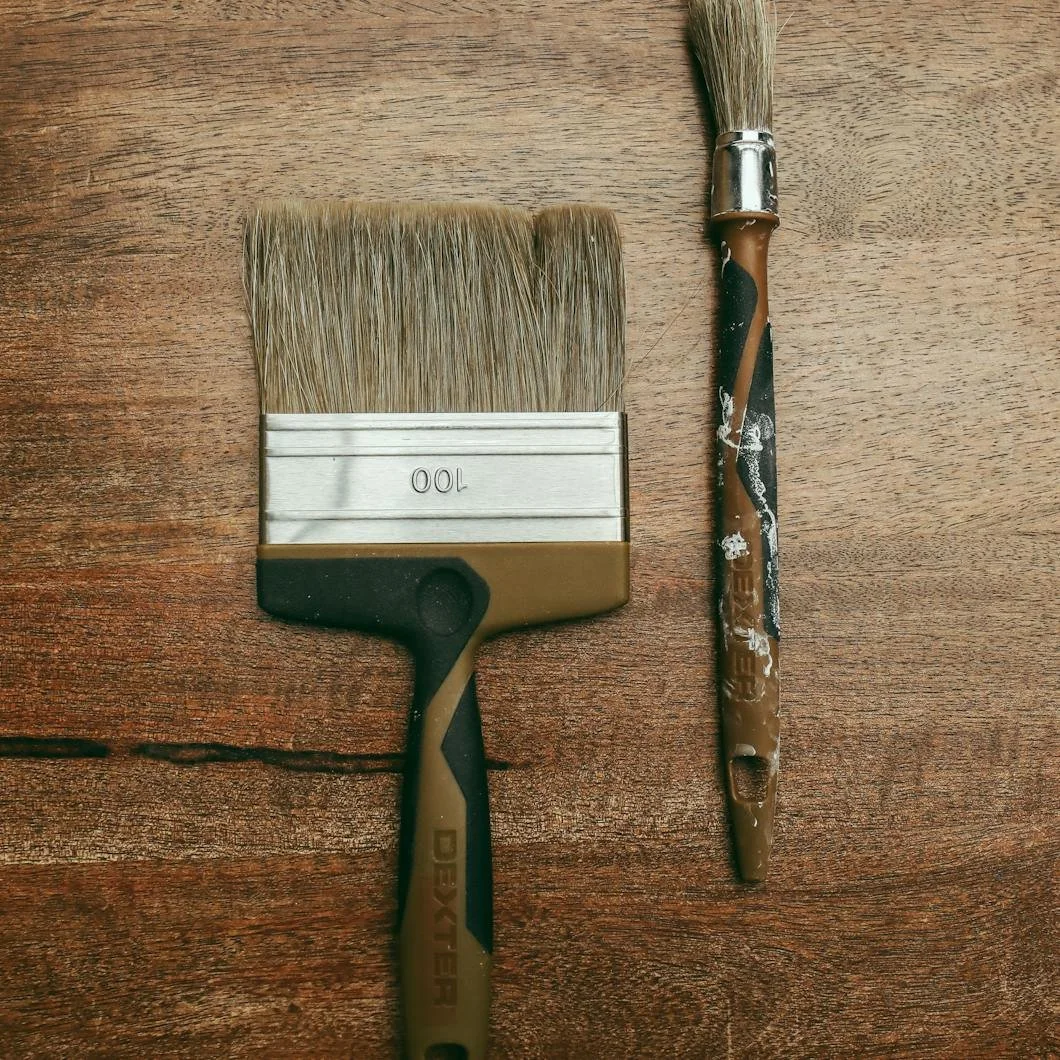
Photo by Polina Tankilevitch
Before rollers, sprayers, and perfectly uniform finishes, paint moved differently across a surface.
It was worked into wood grain, guided along molding profiles, brushed carefully across shutters, siding, plaster, and trim. The finish wasn’t simply applied—it was built gradually, layer by layer, leaving behind subtle variation that reflected the movement of the hand.
For centuries, nearly every painted surface inside and outside a home was finished this way.
The paint brush wasn’t simply a tool used to apply color. It shaped how architecture looked, how details held definition, and how surfaces aged over time. Historic homes, in particular, still carry traces of that relationship. You can see it in softened trim lines, layered exterior woodwork, and finishes that feel slightly different from the perfectly even surfaces common today.
The brush influenced the finish long before modern equipment changed the pace of painting.
And in many ways, it still does.
Today, painting is often associated with speed.
Large rollers cover walls quickly and sprayers create even finishes across wide surfaces. Efficiency matters, particularly in modern construction where smoothness and consistency are often the goal.
For most of history, painting moved at a slower pace because every surface was brushed by hand. That process changed not only how paint was applied, but how a home ultimately looked once the work was complete.
Paint settled differently when worked into a surface rather than rolled or sprayed across it. Texture remained visible, details were followed carefully, and architectural features retained a softness that came from patient application. The method itself became part of the finished result, shaping not only the appearance of the paint but the character of the surface beneath it.
The earliest paint brushes date back thousands of years.
Ancient civilizations created primitive versions from natural materials—animal hair, plant fibers, feathers, and split reeds tied together by hand. Egyptians used brushes for decorative painting, while Chinese brushmaking evolved into a highly refined craft through calligraphy and lacquer work, where precision, softness, and control mattered as much as the material itself.
These early tools were not disposable. They were handmade objects designed to last, often maintained and repaired rather than replaced. Brushmakers understood that the shape of the handle, the density of the bristle, and the flexibility of the brush all affected how paint or pigment moved across a surface.
Even at the beginning, the tool influenced the outcome.
By the 18th and 19th centuries, painting had become a recognized trade throughout Europe and North America.
Homes were painted not only for protection, but as an expression of permanence, craftsmanship, and status. Exterior colors distinguished architectural styles. Interior finishes reflected changing tastes and social expectations.
As houses became more detailed, brushes became more specialized.
Painters relied on different tools depending on the surface and the finish they were trying to achieve:
Flat brushes for siding and broad surfaces
Sash brushes for windows and narrow trim
Round brushes for molding and detail work
Stiffer bristles for thicker oil-based paints
Softer brushes for varnishes and fine finishes
The brush was selected not simply for efficiency, but for how it shaped the final appearance.
That distinction mattered.
Painting was less about covering a surface and more about working with it.
This relationship becomes especially visible in older homes.
Historic architecture relies heavily on detail—crown molding, fascia boards, brackets, shutters, railings, layered trim, and decorative millwork. Before rollers existed, every inch of those surfaces was brushed by hand.
Paint followed the shape of the architecture with quiet precision. It settled into corners, softened edges slightly, and moved across wood grain rather than concealing it entirely. The texture of the application became part of the surface itself, adding subtle depth and character rather than something to be eliminated.
Brush marks were not treated as imperfections; they reflected the steady pace of the work and the tangible, physical relationship between the painter and the material.
You can still see this today on older homes, particularly on original trim, historic siding, or architectural woodwork that has been painted repeatedly over decades. The finish develops a softness that is difficult to replicate through faster methods, allowing paint to become part of the building’s visual history rather than simply a coating applied over it.
By the late 19th century, brush manufacturing became industrialized.
Commercial brush makers began producing standardized tools for painters working across rapidly expanding cities and suburbs. Bristles—often made from hog hair or horsehair—were sorted by stiffness and durability. Ferrules became machine-made. Handles were shaped for comfort and repeat use.
Painting remained skilled labor, but the tools became more accessible.
As residential construction increased, so did the demand for painters capable of finishing homes quickly and consistently. Brushmaking evolved alongside the building industry itself.
The paint brush became both a trade tool and a symbol of the profession.
Even today, the silhouette of a brush still carries an almost immediate association with craftsmanship.
Then came the roller.
Introduced widely in the mid-20th century, paint rollers transformed residential painting and altered how homeowners and professionals approached projects.
Walls could be covered far more quickly than before, and large surfaces became easier to finish with an even coat. Interior work accelerated, schedules shortened, and labor demands shifted. Sprayers followed, especially in commercial and exterior applications where speed and coverage mattered most. Painting began to lean heavily toward efficiency, prioritizing rapid completion and uniform results.
For many surfaces, these innovations made perfect sense. Drywall, modern trim, and large uninterrupted walls often benefit from the smoother, more consistent application rollers and sprayers provide. Contemporary architecture frequently favors flatness and visual uniformity, so these tools complemented new design priorities well.
But in the rush to optimize technique and output, something subtle changed in the process. The visible evidence of the hand—the small variations, the brush marks and textured strokes that once hinted at the craftsman behind the work—became less noticeable, almost disappearing from finished interiors.
Brushwork carries a different relationship to the surface beneath it.
A brush follows the shape of the material rather than flattening it. It moves into grooves, molding profiles, corners, and imperfections. It adapts to irregularity rather than covering it.
You can often tell when a surface was painted carefully with a brush versus quickly sprayed or rolled—not because one method is inherently better, but because each produces a different visual language.
Brush application tends to preserve detail. It responds to the architecture rather than imposing uniformity onto it.
This is especially important in historic homes, where trim profiles, layered woodwork, and older materials benefit from a slower, more controlled approach. A brush follows the structure. And in doing so, it allows the architecture to remain visible.
Even today, despite advances in equipment, brushes remain essential.
Professional painters still rely on them for:
Fine finish trim work
Detailed molding and millwork
Exterior shutters and railings
Window sash painting
Historic restoration work
Architectural woodwork requiring precision
Surface correction and clean cut lines
A roller may cover a wall quickly and evenly. A sprayer may handle large volumes with speed. But a brush still finishes the finer details with precision and care.
There is also something distinctly human about brushwork. A brush records movement and intention. It reflects pressure, pace, direction, and the painter’s level of control. Even when a finish appears perfectly smooth, there is often an underlying softness and subtle texture that comes from paint being worked into a surface rather than merely deposited onto it.
That difference may be subtle, but it changes how paint feels once it dries.
For historic homes especially, brushwork carries continuity. The goal is not always to erase texture or create factory-level perfection. In many cases, preserving some evidence of hand application allows the finish to remain aligned with the age and character of the architecture itself.
Paint should belong to the house. And sometimes, that means allowing the tool to shape the finish rather than hiding the process completely.
The history of the paint brush is not really about the tool alone.
It is about the relationship between handwork and surface, between craftsmanship and architecture, and between method and result.
Before painting became defined by speed, it was shaped by patience.
The brush influenced how homes looked, how details held definition, and how finishes aged over time.
Despite advances in modern equipment, certain surfaces still benefit from that same slower approach.
Not because it is merely nostalgic, but because certain pieces of architecture still demand the careful touch of the hand.
Ready to Help
Whether restoring historic trim, refreshing exterior woodwork, or creating a refined interior finish, the right tools still matter.
At Stanwich Painting, every project begins with a detailed estimate that outlines preparation, materials, and the full scope of work before anything begins. That clarity ensures surfaces are treated appropriately—whether by brush, roller, or a combination of methods suited to the architecture itself.
To schedule a consultation, visit or call 475-252-9500.
Stanwich Painting proudly provides top-quality residential painting services throughout Fairfield County, including: Greenwich, Cos Cob, Riverside, Old Greenwich, Stamford, Darien, New Canaan, and Wilton
Further Reading
Brushstrokes of History: Historic Finishes and Decorative CraftA thoughtful look at how hand-applied finishes shaped the character of older homes and architectural surfaces, especially in restoration work.
Read ArticleA Brief History of the PaintbrushA concise overview tracing the evolution of paint brushes from early handmade tools to modern brushmaking traditions.
Read ArticleThe History of Making Paint BrushesAn interesting look at how brush manufacturing evolved over time, including materials, bristle development, and industrial production.
Read ArticleHistoric Paint Preservation and Traditional FinishesA preservation-focused resource exploring how older paints, surfaces, and historic application methods influence restoration today.
Read ResourceThe Decorative Painter and the Rise of House PaintingA historical overview of decorative painting as a trade and how brushwork shaped architectural interiors and finishes.
Read Article