
The Awkward Hallway: Why Transitional Spaces Deserve Better Paint
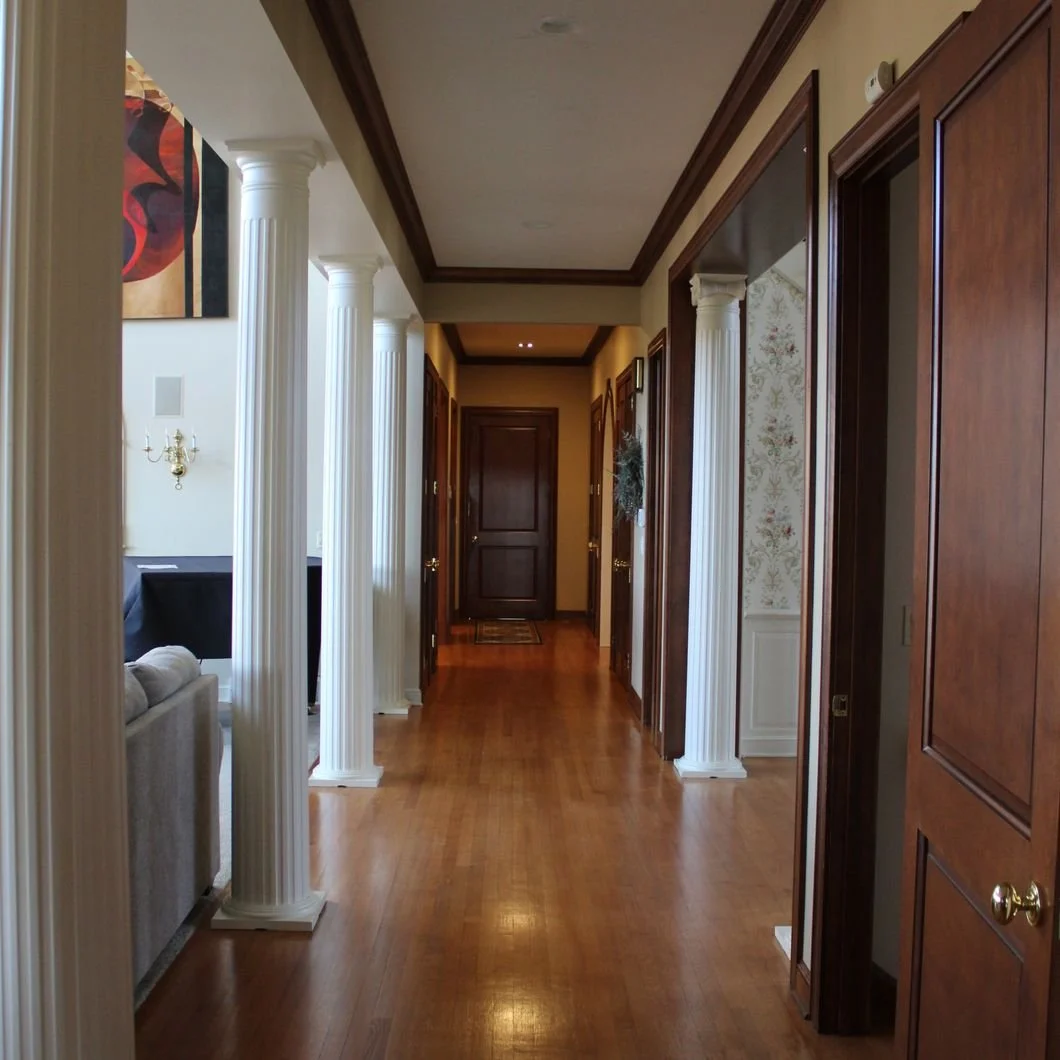
Photo by Keith Cassill
A hallway has a difficult job and very little glamour.
It is not quite a room, though it has walls, trim, doors, ceilings, lighting, flooring, artwork, and all the usual opportunities for things to go wrong. It is not quite a destination, either, unless someone is standing there trying to remember why they came upstairs. No one hosts a dinner party in the hallway. No one says, “Let’s sit in the hall for a while,” unless something has gone wrong with the seating plan or the family dog has staged a protest at the bedroom door.
And yet the hallway quietly controls a great deal of how a house feels.
It is the passage between rooms: the connector, the pause, the tunnel, the gallery, the spine. It is where the house changes subject. A living room becomes a dining room. A bedroom becomes a bath. A front entry becomes the private part of the home. The hallway carries people through those transitions all day long, usually while absorbing fingerprints, laundry baskets, backpacks, dog tails, moving boxes, and the occasional wall scrape from furniture that was absolutely going to fit around that corner.
For all that work, hallways are often painted as an afterthought.
They get the leftover neutral, the default white, the same color as whatever room was most recently painted, or something chosen quickly because “it’s just the hall.” That phrase has probably done more damage to hallway design than anyone wants to admit. The hall may not be the most dramatic part of the house, but it is rarely just anything.
A hallway does not need to become a destination, but it does need to make the rest of the house feel connected.
The Hallway Is Where the House Moves
The strange thing about a hallway is that it is defined by movement. Most rooms are designed around stopping. You sit in the living room, sleep in the bedroom, cook in the kitchen, gather in the dining room, work in the office, or stand in the laundry room questioning the entire category of fitted sheets.
A hallway is different. It is passed through. It is experienced in motion, which means its paint color, lighting, trim, and finish are rarely admired in a still, composed way. They are felt quickly, repeatedly, and almost unconsciously.
That is why hallway color matters more than people expect.
A hallway can make a house feel calm and coherent, or it can make the home feel chopped into unrelated parts. It can soften the transition between rooms, or it can make every doorway feel abrupt. It can carry the palette of the house gracefully, or it can become the place where every nearby color starts arguing in public.
This is especially true in homes where rooms have different moods. A blue bedroom, a warm white living room, a green study, and a darker dining room can all work beautifully together if the hallway gives them a common language. Without that bridge, the house may feel like a collection of separate decisions rather than one thoughtful interior.
The hallway does not have to match every room. In fact, it probably should not. But it does need to relate.
The Tunnel Problem
Some hallways are awkward because they are narrow, interior, and short on natural light. In those cases, the hallway can begin to feel less like a gracious passage and more like a domestic tunnel with better baseboards.
This is where people often reach for bright white, hoping it will make the space feel larger. Sometimes that works. Often, though, a cold or stark white in a hallway with limited light simply looks flat, shadowy, or slightly unfinished. Without enough natural light to bring it to life, bright white can feel less fresh than expected.
A warmer white, soft plaster neutral, pale greige, muted taupe, or gentle gray-beige may do more for the space. These colors give the walls something to hold onto. They can make the hallway feel calmer and more intentional without asking it to pretend it is sunny.
The ceiling matters here, too. In a narrow hall, a harsh ceiling line can make the space feel even more compressed. Sometimes a softer ceiling white, or a ceiling color that relates more closely to the walls, can reduce the visual stop and make the passage feel smoother.
The goal is not to trick anyone into thinking the hallway is enormous. Everyone knows it is a hallway. The goal is to make the space feel considered rather than forgotten.
Hallways Are Mostly Edges
A hallway is rarely just wall color.
It is doors, door casings, baseboards, crown molding, stair rails, closet doors, thresholds, ceiling lines, and corners. It is basically an entire architecture of edges. If the trim color is too sharp, too dull, too yellowed, or too disconnected from the wall color, the hallway will show it immediately.
This is one reason hallways can look tired even when they are technically clean.
Scuffed baseboards, nicked door frames, fingerprints near light switches, chipped corners, and old caulk lines all collect in transitional spaces. A living room may have furniture and textiles to soften the view, but a hallway has nowhere to hide. The trim is right there, doing its best under difficult circumstances.
A fresh wall color can help, but if the trim is not addressed, the hallway may still feel unfinished. The relationship between wall and trim is especially important when there are many doors. A long upstairs hallway with five bedroom and bath doors can quickly become visually busy if the wall color, door color, and casing contrast are not handled with care.
Sometimes contrast is useful. A deeper wall color with crisp trim can make a hallway feel gallery-like. In other cases, a more tonal approach can make the space quieter, especially in narrow halls where too many hard outlines make everything feel chopped up.
The hallway will tell you which version it wants, though usually in the least convenient way.
Should the Hallway Flow Into the Rooms?
The short answer is yes, but not by disappearing.
A hallway should help rooms connect without erasing their individuality. It can act as the house’s bridge color, carrying a neutral, softened white, warm plaster tone, muted green-gray, or deeper shade that makes the adjacent rooms feel more deliberate.
If the rooms off the hallway are colorful, the hall may need to be quieter. If the rooms are mostly neutral, the hallway may be able to carry a little more mood. If the house has strong trim, older woodwork, or beautiful doors, the wall color should support those details rather than compete with them.
Sightlines matter here. From the entry, what do you see through the hall? From the living room, does the hallway color sit well in the background? When a bedroom door is open, does the hall fight the room or frame it? These questions may sound fussy until the wrong hallway color answers them loudly.
A good hallway color does not need to impress anyone on its own. Its success is often measured by how naturally everything else feels connected.
Paint Colors to Consider for Hallways
The right hallway color depends on the light, width, flooring, trim, and surrounding rooms, but certain color families tend to work especially well in transitional spaces.
Warm plaster neutrals
Colors like Benjamin Moore Natural Cream OC-14, Ballet White OC-9, or Farrow & Ball Skimming Stone can help a hallway feel soft, finished, and connected without becoming plain.Softened whites
Benjamin Moore Maritime White OC-5, Acadia White OC-38, or Farrow & Ball Pointing can work well when the hallway needs brightness but not the sharpness of a cold white.Muted greens and gray-greens
Benjamin Moore Gloucester Sage HC-100, Dry Sage 2142-40, or Farrow & Ball Lichen can give a hallway character while still feeling calm, especially near wood floors, older trim, or garden-facing rooms.Blue-grays and smoky tones
Benjamin Moore Van Courtland Blue HC-145, Smoke Embers 1466, or Farrow & Ball De Nimes can make stair halls, upper halls, or gallery-like passages feel more atmospheric.Deeper accents for doors, rails, or built-ins
Benjamin Moore Mysterious AF-565, Dragon’s Breath 1547, or Farrow & Ball Railings can bring depth to interior doors, stair rails, cabinetry, or the far end of a hallway that needs an anchor.
Durability matters in hallways, too. These spaces take contact. Hands touch walls. Bags hit corners. Shoes scuff baseboards. Dogs, children, guests, and furniture all make their contributions. The finish needs to suit the traffic, especially on trim, doors, and lower walls. A beautiful hallway color still needs the right preparation, sheen, and product if it is going to survive actual life.
The Space Between Rooms Still Counts
The hallway may never be the most admired part of the house, and that is fine. It is not trying to be the living room. It does not need a grand identity crisis. It simply needs to do its job well.
That job is more important than it looks.
A hallway creates flow. It holds transitions. It frames doorways. It carries light from one part of the house to another. It gives the eye a place to rest between rooms. When painted thoughtfully, it can make the whole home feel more coherent, polished, and settled.
When ignored, it can quietly make everything around it feel less finished.
That is the awkward truth of the hallway. It is the space between the spaces, which makes it easy to overlook and surprisingly powerful once it is handled well.
A hallway does not need to become a room, but it does need to belong to the house. And sometimes, with the right color, better trim, a more thoughtful ceiling, and a finish that can handle real traffic, that awkward passage becomes exactly what the home needed all along: not a destination, but a better way through.
Hallways do more work than they get credit for. Stanwich Painting can help you refresh walls, trim, doors, and stair passages with colors and finishes that improve flow, durability, and the overall feeling of your home.
Stanwich Painting proudly provides top-quality residential painting services throughout Fairfield County, including: Greenwich, Cos Cob, Riverside, Old Greenwich, Stamford, Darien, New Canaan, and Wilton