
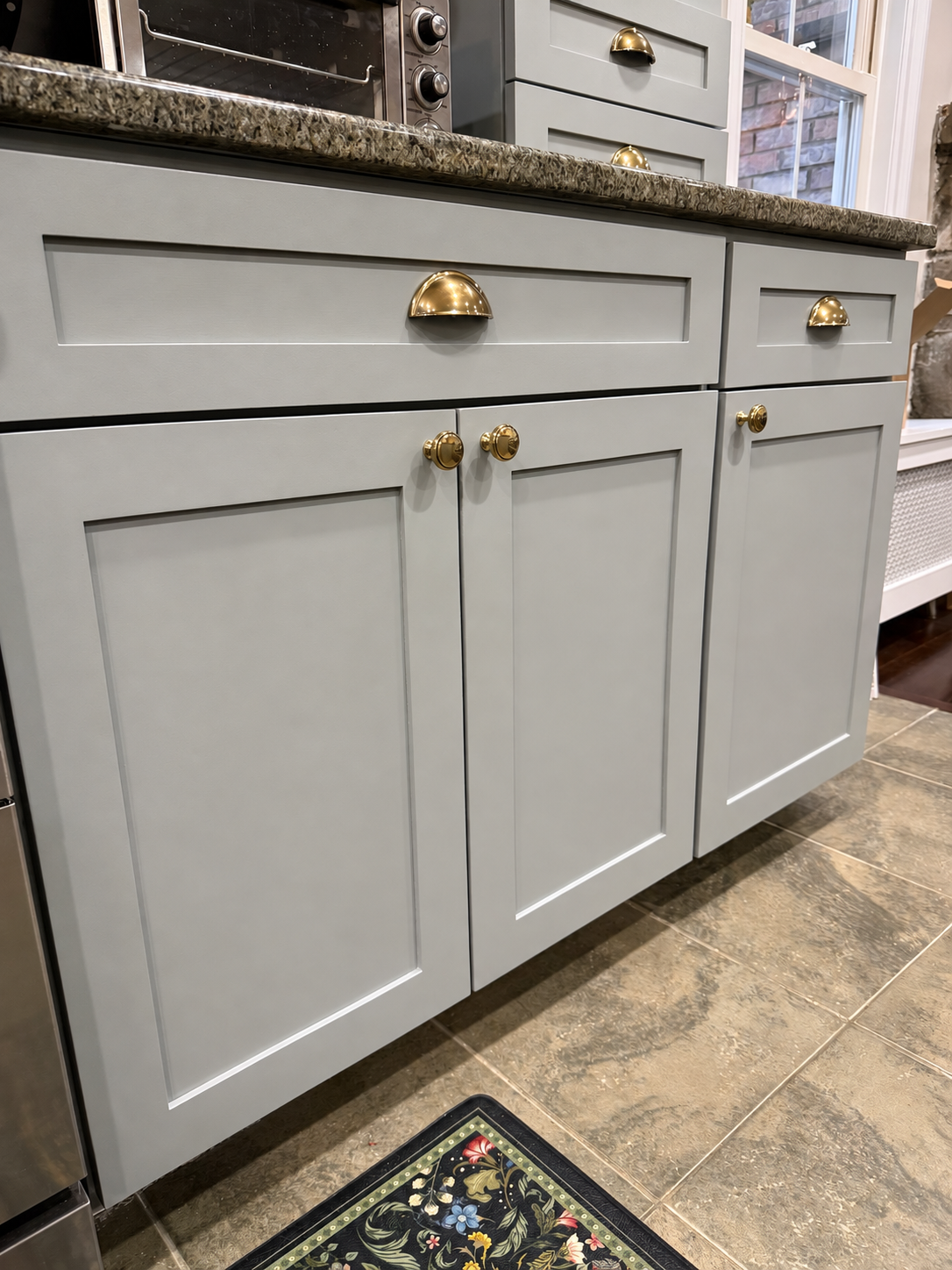
Photo by Stanwich Painting
There is a point in many kitchens when the cabinets begin to feel tired, even though the kitchen still works. The doors open properly. The drawers hold what they need to hold. The layout makes sense. Yet the color, sheen, or worn finish makes the whole room feel older than it is.
Replacing cabinetry is one possible answer. It is not always the necessary one. When the cabinets are sound and the layout suits your household, a carefully planned painted finish can change the character of the kitchen while keeping the parts that already serve you well.
The key is to assess the cabinetry before choosing a color.
Start with the cabinets themselves
Look past the existing finish. Are the boxes secure? Do the doors fit and close as they should? Are the drawers functioning well? Is there significant water damage, swelling, or failing material around the sink and dishwasher?
Paint changes appearance; it does not correct structural problems. Minor surface wear and agreed repairs may be part of a refinishing project. Cabinets that are deteriorating or poorly suited to the room may call for more extensive work. An assessment helps separate a finish problem from a cabinet problem.
The existing coating matters, too. Previously painted, stained, or factory-finished surfaces can require different preparation. Cleaning and degreasing, sanding, repairs, and priming as needed provide the foundation for the selected coating. The proposal should say which surfaces and steps are included.
Consider what you want the kitchen to become
A cabinet color does not live on its own. It sits beside the countertops, backsplash, flooring, wall color, hardware, and natural light. A shade that looks beautiful on a small chip can look quite different across an entire bank of doors.
Before committing, consider a physical sample in the kitchen. Look at it in morning and evening light and beside the materials that will remain. Decide whether the goal is a quiet, cohesive change or a stronger contrast. Sheen also affects how the finish reads and how readily it shows everyday marks.
You may be keeping the hardware, replacing it, or changing only part of the cabinetry. Those choices are worth making early so the full result feels intentional.
Ask how the finish will be applied
There is more than one sound way to finish a cabinet project. Depending on the cabinetry, the coating, the space, and the look you want, the work may be approached in three ways:
Spray everything. Doors, drawer fronts, and fixed cabinet frames are sprayed when the site conditions and protection plan make that practical.
Brush and roll everything. The entire project is finished by hand with appropriate tools and techniques.
Use a combination. Doors and drawer fronts may be sprayed, while fixed frames are brushed and rolled in place.
Each approach has implications for protection, access, texture, and scheduling. The right choice should be explained before the work begins, along with where doors and drawers will be finished and how the surrounding kitchen will be protected.
Plan for the time after the last coat
The day the cabinets are ready for light use is not necessarily the day the coating has fully cured. The drying and curing guidance depends on the product selected. Ask when doors and drawers can be reinstalled, when normal kitchen use can resume, and how to treat the surfaces while the finish continues to cure.
The project schedule also depends on the number of doors and drawers, the amount of preparation and repair, the application approach, and the coating system. A written proposal should set out the expected sequence and any likely limits on kitchen use.
When refinishing makes sense
Cabinet painting is worth considering when you like the layout, the cabinetry is in suitable condition, and the main change you want is visual. It can bring a new color and finish to an existing kitchen without redesigning the whole room.
If you need a different layout, more storage, or extensive repairs, discuss those needs before choosing a finish. The best outcome starts with an honest assessment of what the cabinets can—and cannot—do.
At Stanwich Painting, we assess existing cabinetry, discuss color and sheen, and define the preparation, coating, and application method in the proposal. Explore our cabinet painting and refinishing service, or request a cabinet assessment to tell us about your kitchen.