
Why 1990s Homes Feel Stuck And Why That Was The Point
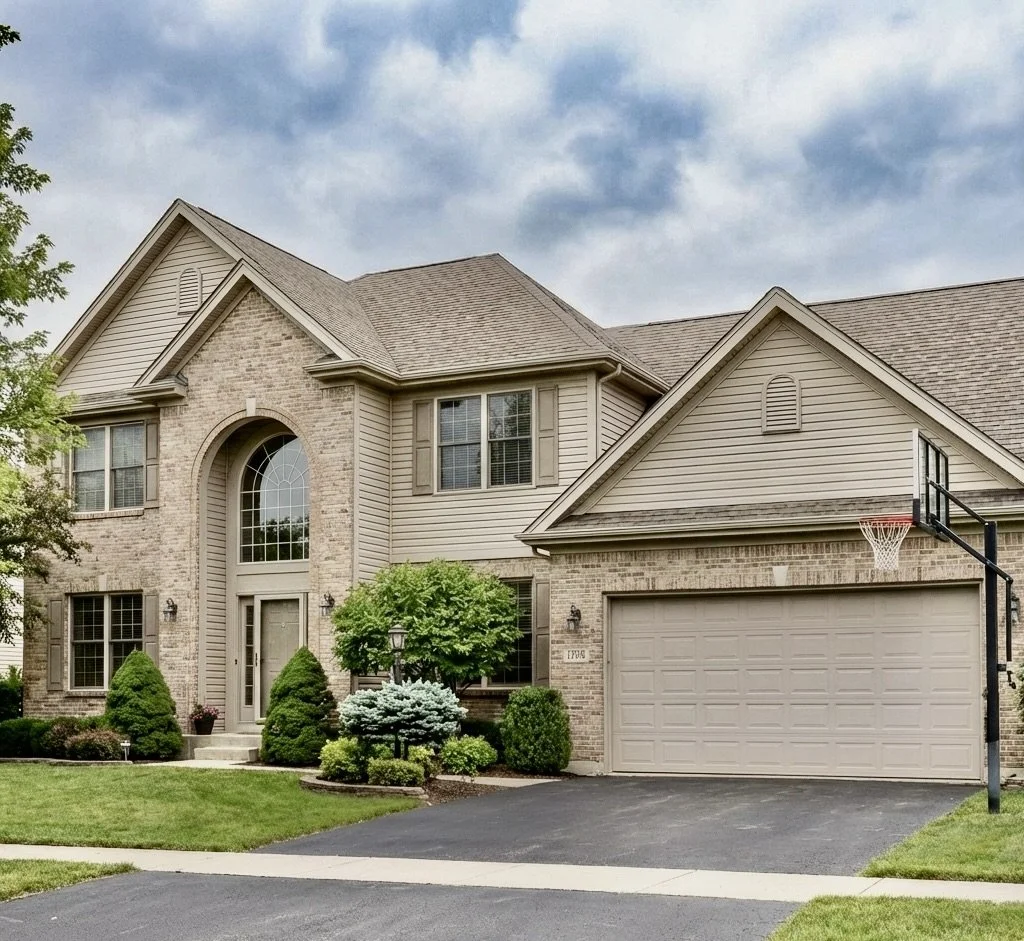
Homes built in the 1990s weren’t trying to be interesting. They were trying to be…fine.
Fine enough to show your parents. Fine enough to resell and fine enough that no one would ask too many questions.
This was the era of responsible decisions. Of neutral finishes. Of houses designed to signal that you had reached a stable point in life and intended to remain there calmly, without drama. Nothing too bold. Nothing too strange. Nothing that might need explaining later.
And at the time, this approach worked remarkably well.
A 1990s house didn’t need a strong point of view. It needed to feel safe emotionally, financially and aesthetically. Beige walls weren’t a failure of imagination; they were a promise. Oak railings weren’t a design statement; they were proof that you’d selected the upgrade package. The goal wasn’t to impress. It was to reassure.
Which is why so many of these homes feel so odd to look at now. Not wrong. Not ugly. Just…unresolved.
Scroll through listings from that era and you’ll start to recognize the pattern. The houses are usually well maintained. Often clean to the point of carefulness. The layouts make sense. The square footage is generous. Everything is technically “nice.” And yet there’s often a moment where you pause, not because something is broken, but because nothing is quite speaking up.
That pause isn’t confusion so much as interpretive hesitation. You’re waiting for the house to tell you what kind of place it wants to be, and it never quite does.
The confusion often shows up early, usually right at the front door. The foyer isn’t grand enough to feel intentional, but it’s too formal to feel casual. The staircase is positioned to be seen, though not necessarily admired. The wood railing is finished in a tone that once read as respectable and now reads as politely noncommittal. Nothing offends. Nothing commits.
This isn’t a design failure. It’s a design strategy.
1990s homes were built to live comfortably in the middle. Middle class, upper middle class, or a strange in-between version of “luxury” that was more about aspiration than declaration. These houses wanted to appeal to as many futures as possible. They were designed to age without embarrassment, which often meant avoiding personality altogether.
At the time, that caution felt smart. Markets changed. Tastes shifted. Resale mattered. The safest house was the one that stayed agreeable under all circumstances.
But design that’s optimized for safety doesn’t age gracefully. It just waits.
This is why so many 1990s interiors now feel frozen between identities. They gesture toward quality without insisting on it. They borrow cues from traditional homes—formal entryways, visible woodwork, symmetry—but deploy them gently, as if afraid of leaning too far in any direction. The result is an interior that’s competent but hesitant, tidy but strangely unfinished.
And because nothing is wrong, it’s hard to know what to fix.
This is also why updating these homes can feel more frustrating than updating older ones. A historic house has a point of view, even if it needs work. A truly modern house has one too, even if it’s not your taste. A 1990s house, by contrast, often feels like a collection of reasonable decisions waiting for further instruction.
Homeowners usually start with the obvious moves. New furniture. Updated lighting. Better hardware. And while all of that helps, the underlying feeling often remains. The house still feels polite. Still cautious. Still unwilling to take a position.
That’s because the issue isn’t decor. It’s commitment.
Paint plays a quietly outsized role in this story. In many 1990s homes, paint wasn’t used to shape mood or experience. It was used to stay neutral. Beige walls avoided preference. White ceilings followed convention. Glossy trim signaled completion, not intention. Paint existed to comply, not to decide.
Decades later, that neutrality reads as absence.
This is where paint becomes surprisingly powerful—not because it modernizes, but because it forces a decision. In a house designed to avoid risk, even restrained paint choices can introduce clarity. They establish hierarchy. They decide what recedes and what anchors a space. They give the house a perspective it was never asked to have when it was built.
This doesn’t mean turning a 1990s home into something it isn’t. It means allowing it to stop hedging.
When walls, trim, ceilings, and transitional elements are considered together—as a system rather than as defaults inherited from the original build—the house begins to organize itself. The foyer relaxes. The staircase stops feeling self-conscious. Spaces relate to one another instead of politely coexisting. Light behaves more consistently. The interior feels less like a checklist of safe choices and more like a place with a point of view.
There’s also an emotional reason this era keeps resurfacing, especially now. The 1990s represented a kind of stability that feels distant. Life moved more slowly. Expectations were clearer. The future felt broadly understandable. That sense of order is deeply appealing in a moment when everything feels provisional.
That’s why younger generations are drawn to the decade’s music, television, and aesthetics. Not because the details were remarkable, but because the atmosphere suggests something rare: coherence. A world where “nice” was enough, and staying put felt like an option rather than a failure of ambition.
Homes from that era carry that emotional residue. They’re comforting in theory. Familiar in memory. But lived in today, they can feel oddly nonresponsive—like furniture arranged for someone else’s life.
Updating them isn’t about rejecting that past. It’s about acknowledging that the conditions have changed.
A house doesn’t need to remain visually undecided in order to honor what it once represented. In fact, many 1990s homes improve the moment they’re allowed to stop apologizing for existing. When paint introduces clarity—quietly, without theatrics—the house often settles into itself in a way it never quite managed before.
The discomfort people feel in these interiors today isn’t nostalgia clashing with taste. It’s the fatigue of living inside a space that never finished making up its mind.
That’s why paint matters here. Not just because it refreshes a room. Not simply because it updates a space, but because it makes a lasting commitment to quality, care, and the way you live.
In homes designed to be broadly acceptable, paint is often the first place where specificity can finally enter the room. It’s where a house stops being careful and starts being clear. Where “nice” gives way to something more grounded, more livable, and—ironically—more lasting.
That’s often all these houses were waiting for.