
Stripped To The Bones: Reimagining The New England Home Without Losing Its Soul
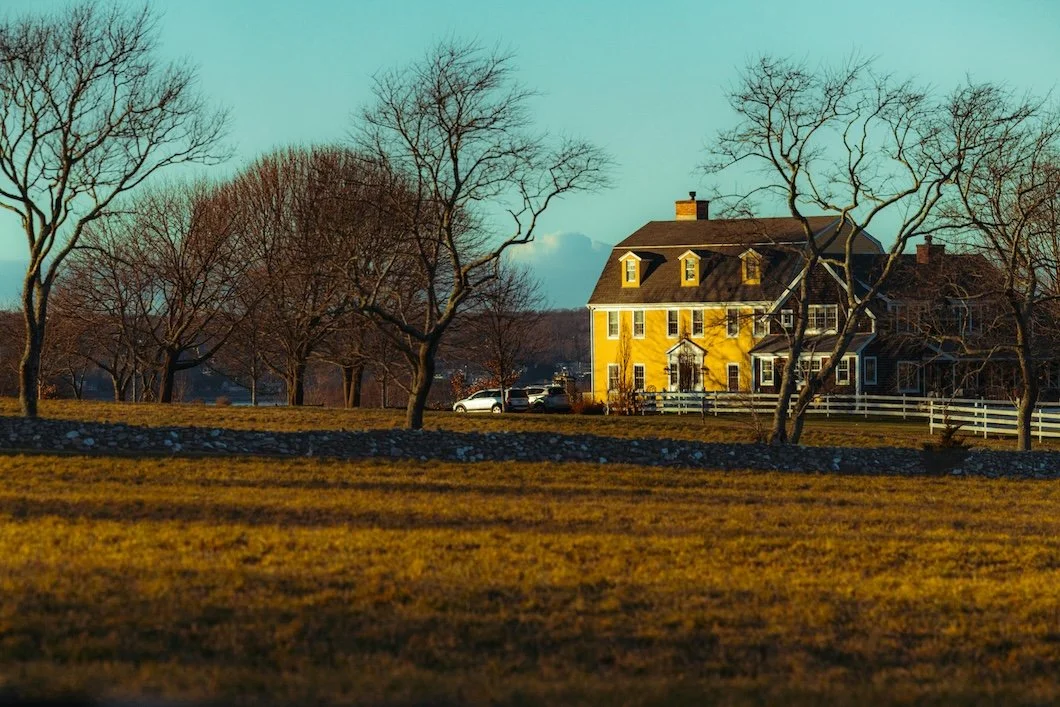
Photo by Brent Singleton
There’s a moment, early in a renovation, when a house stops being decorative and starts being honest.
The drywall is gone. Trim has been pulled back. Layers of paint—sometimes decades of it—have been stripped away. What remains is quieter. Studs, beams, floor joists. The structure that has held the home together long before the current owners ever stepped inside.
It can feel stark at first. Almost unsettling.
But for those who understand it, this is the most revealing phase of a home’s life: the moment when it returns to its bones.
And increasingly, across towns like Greenwich, Darien, and New Canaan—and into neighborhoods like Cos Cob, Riverside, and Old Greenwich—homeowners are choosing not just to renovate, but to reimagine from this place of honesty.
The Problem With Layered Homes
Most New England homes weren’t designed once…they were layered.
A kitchen update in the early 2000s. A repaint in the gray-heavy 2010s. A quick refresh before a sale. Each decision made sense in its moment. But over time, those decisions begin to stack—sometimes quietly, sometimes noticeably—until the home feels slightly out of sync with itself.
Trim profiles no longer match from room to room. Paint colors flatten architectural detail. Finishes compete rather than complement.
Nothing is necessarily wrong…
But something feels off.
This is often what leads homeowners to take a more drastic step—not just updating surfaces, but removing them altogether.
What “The Bones” Actually Reveal
When a home is stripped back, it reveals more than structure. It reveals intention.
You begin to see how the house was originally meant to function—how light moves through the space, how rooms relate to one another, how trim and molding were designed to frame rather than disappear.
In older homes throughout Stamford, Wilton, and the surrounding shoreline communities, this moment can be especially powerful. What’s uncovered isn’t just construction—it’s craftsmanship. And that discovery changes the direction of the renovation.
Because once you see the bones clearly, it becomes harder to ignore them.
The Difference Between Rebuilding and Reimagining
There are two ways to approach a home once it’s been taken back to its structure. The first is to rebuild quickly—new drywall, new paint, new finishes—often following current trends or familiar palettes. The result can look clean, even impressive at first glance.
But sometimes, something subtle gets lost.
The second approach is quieter…
It involves asking a different question:
What is this home trying to be?
Rather than imposing a new identity, the goal becomes refining what’s already there. Preserving proportions. Respecting natural light. Allowing architectural details to guide design decisions instead of competing with them.
This is where renovation shifts from construction to interpretation.
Where Paint Comes Into Focus
In this process, paint takes on a different role.
It’s no longer just about changing color. It becomes a tool for clarifying the architecture. A well-chosen palette can bring forward the subtle relationships within a home—the way trim meets wall, the way light settles across a ceiling, the way one room transitions into the next.
In many cases, that means moving away from sharp contrasts and toward more tonal, layered approaches. Soft whites that carry warmth instead of starkness. Muted greens and blues that echo the surrounding landscape. Earth-based neutrals that feel settled rather than temporary.
Paint, in this context, doesn’t compete with the home. Instead, it supports it.
The Role of Restraint
One of the most common mistakes in high-end renovations is overcorrection.
After stripping a home down to its bones, there can be a temptation to “do more”—to add detail, introduce bold contrasts, or make strong design statements in every room. But often, the most successful projects move in the opposite direction.
They edit and they…simplify. They allow certain elements to remain quiet so others can breathe.
This doesn’t mean the home becomes minimal or sterile. Quite the opposite. It becomes more cohesive. More intentional and more aligned with itself.
Restraint, in this sense, isn’t about doing less. It’s about doing only what matters.
Listening to the House
There’s a subtle shift that happens in thoughtful renovations.
Instead of asking, “What do I want this home to look like?” the question becomes:
“What is this home telling me?”
You start to notice things that may have been overlooked before—the way original trim was proportioned, the height of baseboards, the way natural light changes throughout the day.
Even paint decisions begin to follow this logic. Colors are chosen not just for their appearance, but for how they interact with the structure itself.
The bones begin to guide the outcome.
And when that happens, the final result tends to feel less forced—more settled, more natural, more complete.
The Quiet Craft Behind the Finish
Of course, none of this comes together without execution.
A thoughtful design can easily be undermined by rushed work. In homes that have been taken back to their structure, surface preparation becomes even more critical. Walls must be properly repaired, smoothed, and primed. Trim lines need to be clean and intentional. Finishes must be applied evenly so that light interacts with the surface the way it’s meant to.
Inside the painting trade, there’s a simple understanding: The finish only looks as good as what’s underneath it.
And in homes where every detail has been reconsidered, that underlying work becomes visible—even if most people can’t immediately explain why.
They just feel it.
Returning to Something That Was Always There
For homeowners across Greenwich, Darien, New Canaan, and Wilton, this kind of renovation isn’t really about starting over. It’s about returning.
Returning to proportion craftsmanship, and a sense of coherence that may have been buried under years of well-intentioned updates.
When a home is stripped to its bones and rebuilt with care, it doesn’t just look better. It feels different—quieter—andmore grounded. As if the house has finally been allowed to be itself again.
If you’re planning a painting project—whether as part of a renovation or simply to bring more clarity and cohesion to your space—it helps to begin with a clear understanding of what the work involves.
At Stanwich Painting, every project starts with a detailed estimate that outlines preparation, materials, and the overall process before any work begins. That clarity helps ensure the finished result not only looks right, but lasts.
Schedule a consultation or call 475-252-9500.
Stanwich Painting proudly provides top-quality residential painting services throughout Fairfield County, including: Greenwich, Cos Cob, Riverside, Old Greenwich, Stamford, Darien, New Canaan, and Wilton