
Soft Light, Fresh Air: Refined Spring Pastel Palettes For The Modern Home
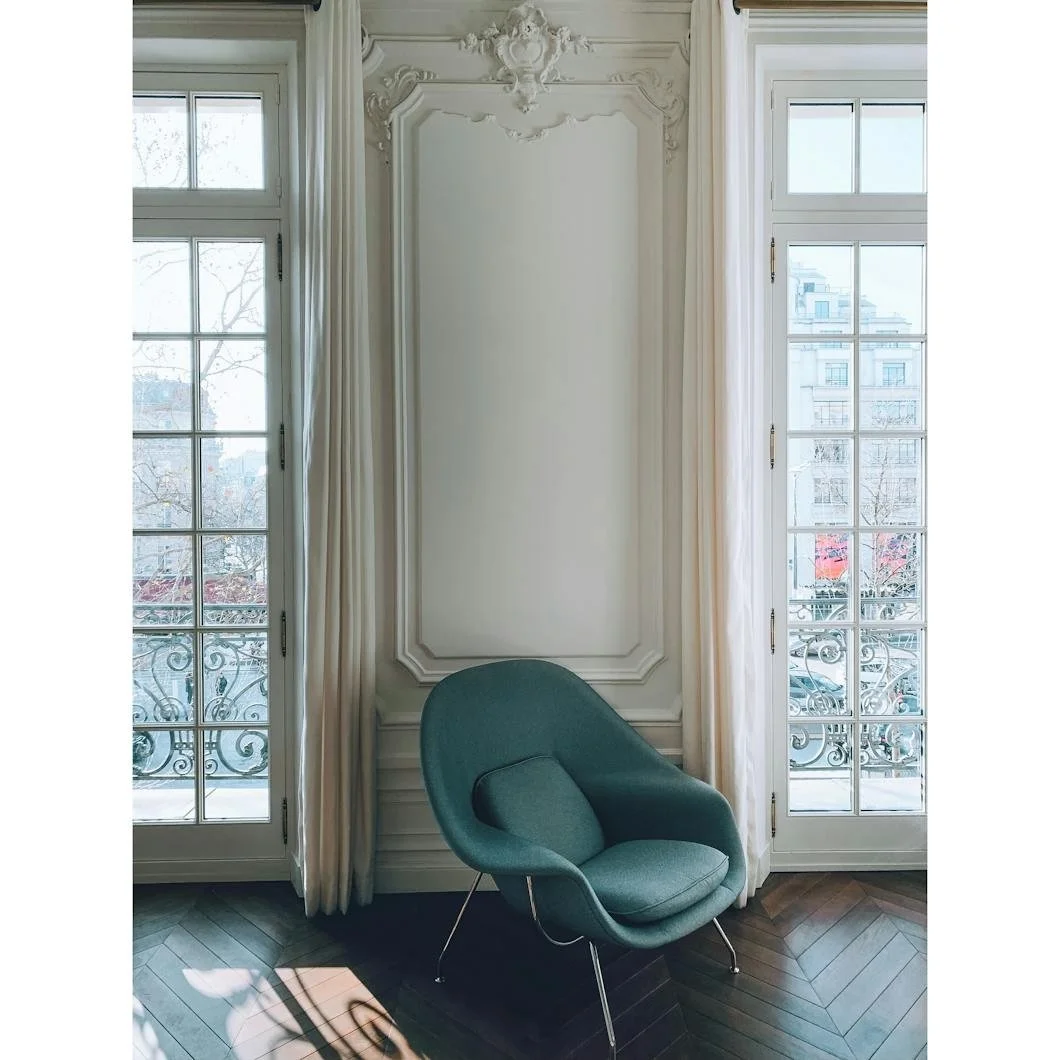
Photo by Tuba Miray
There is a stretch of March when the light begins to change…
It’s subtle at first. Mornings feel a little brighter, and the air seems to carry a hint of warmth. Shadows soften and the angles around the garden feel less severe. Colors that felt grounded and heavy through winter begin to lift slightly, almost as if the house itself is exhaling and making room for something fresher. This is where spring palettes begin, nudging us toward lighter tones and renewed layers of color.
Not with bold color, but with a shift toward lightness—tones that reflect more daylight, more openness, more air. Rooms that once held weight begin to feel easier, less contained.
Pastels, when used thoughtfully, do exactly that.
But not the overly sweet or overly saturated versions many people associate with the word. Today’s spring palettes are quieter. More grounded. Designed to feel natural within the architecture of the home, not layered on top of it.
Across homes in Greenwich, Darien, New Canaan, and throughout Fairfield County, we’re seeing a return to these softer palettes—used with more restraint, more nuance, and a stronger understanding of how color interacts with light.
Rethinking Pastel: Soft Doesn’t Mean Simple
Pastel doesn’t mean pale for the sake of being pale. At its best, a pastel carries just enough pigment to feel present without overwhelming the room, offering a gentle, assured presence. It allows walls to reflect light softly rather than absorb it, creating a calm, quiet atmosphere that shifts subtly throughout the day as natural and artificial light change.
The difference comes down to complexity and nuance. A well-chosen pastel isn’t flat: it contains undertones that give it dimension and interest. A soft green might carry a hint of gray; a pale blue may lean slightly warm or cool depending on the light; a blush tone can read more like a versatile neutral than a distinct color. These subtle variations keep the space feeling alive rather than static.
This is where premium paint lines like Benjamin Moore and Farrow & Ball often stand apart. Their softer colors are rarely one-dimensional. Even at their lightest, they retain delicate variations that allow them to age and adapt gracefully, helping them to live comfortably in a space over time.
In practice, a pastel wall doesn’t shout for attention. It integrates with the room, supporting furnishings and light, and creating a background that feels considered and enduring rather than merely decorative.
A Classic Spring Living Room: Soft Greens & Warm Whites
Spring often begins with green—but not the bright, grassy tones that feel seasonal or temporary. Instead, think of greens that feel slightly weathered, slightly muted, as if they’ve been softened by time. These tones tend to work particularly well in living spaces where natural light moves gradually throughout the day.
Colors like Benjamin Moore’s Hollingsworth Green or Farrow & Ball’s Teresa’s Green create a calm, grounded base. Paired with warmer whites—White Dove or Pointing—the result is a space that feels open without feeling stark.
What makes this palette effective is its balance. The green introduces a sense of renewal, but the warmth in the white keeps the room anchored. Nothing feels overly fresh or overly formal. It simply feels settled.
Bedrooms: Powder Blues & Quiet Grays
Bedrooms benefit from palettes that reduce visual noise. Soft blues are often a natural choice, but the key is avoiding anything too crisp or overly cool. A blue that leans slightly gray tends to create a more restful environment, especially as daylight shifts into evening.
Benjamin Moore’s Breath of Fresh Airor Farrow & Ball’s Borrowed Light offer that balance. They carry enough pigment to feel intentional, but enough softness to remain unobtrusive.
Layering these tones with gentle neutrals—Classic Gray or Ammonite—creates a subtle gradient within the room. Walls, trim, and surrounding surfaces don’t compete…they move together.
The result is a bedroom that feels consistent from morning through night, rather than dramatically changing with the light.
Dining Rooms: Blush as a Neutral
Blush tones have evolved significantly over the past decade. What once felt trend-driven now has a more permanent role when used correctly. In many cases, a soft blush functions less like a color and more like a warm neutral that introduces softness without drawing attention to itself.
Benjamin Moore’s First Light or Farrow & Ball’s Setting Plaster are good examples. They sit comfortably between pink, beige, and clay, depending on the surrounding light.
When paired with grounded neutrals like Edgecomb Gray or Jitney, the palette becomes more architectural than decorative. Dining rooms are particularly well-suited for this approach. As natural light fades and artificial light takes over, blush tones tend to deepen slightly, adding warmth without becoming heavy.
Kitchens & Transitional Spaces: Sun-Washed Yellows
Yellow is often overlooked in contemporary interiors, largely because it’s easy to get wrong. Too bright, and it feels sharp. Too saturated, and it becomes difficult to live with. But when softened, yellow can behave almost like light itself: subtle, warm, and quietly present.
Tones like a softened Hawthorne Yellow or Farrow & Ball’s Dayroom Yellow work best when they feel slightly aged rather than freshly applied. Paired with creams like Swiss Coffee or School House White, they create spaces that feel naturally illuminated rather than artificially bright. These palettes are especially effective in kitchens and transitional spaces where daylight plays a central role. Instead of competing with the light, the color works alongside it.
Letting Light Lead the Palette
If there’s one guiding principle that defines successful pastel interiors, it’s this: light determines everything. Pastels are highly responsive and reflective rather than absorptive, so they shift subtly and sometimes dramatically depending on exposure, time of day, and the colors and finishes of surrounding surfaces. A shade that feels perfectly balanced in one room can read as entirely different in another. In homes throughout Riverside, Old Greenwich, Stamford, and Wilton, these variations are often quite pronounced. North-facing rooms frequently benefit from slightly warmer pastel tones to counter cooler, bluer natural light, while sun-drenched south-facing spaces can handle cooler pastels without feeling chilly. The goal isn’t to apply a single color universally; it’s to assess and respond to each space individually.
A Softer Approach to Seasonal Change
Spring design doesn’t need to feel seasonal in an obvious way. It doesn’t require bold color shifts or decorative trends that come and go. In many cases, the most effective updates are the quietest ones—subtle adjustments that allow a home to feel lighter, more open, more in sync with the time of year.
Pastels, when chosen with care, do exactly that.
They don’t announce themselves. They don’t dominate the room. Instead, they settle into the background and begin to shape how the space feels over time. And in well-designed homes, that’s often the goal. Not to impress immediately, but to remain comfortable, balanced, and enduring long after the season has passed.
Ready to Help
If you’re considering a spring update—whether it’s a full interior repaint or a subtle palette refresh—it helps to begin with a clear understanding of how color, light, and preparation all work together.
At Stanwich Painting, every project begins with a detailed estimate that outlines surface preparation, materials, and the overall process before work begins. That clarity helps ensure the finished result feels cohesive, natural, and built to last.
Schedule a consultation or call 475-252-9500.
Stanwich Painting proudly provides top-quality residential painting services throughout Fairfield County, including: Greenwich, Cos Cob, Riverside, Old Greenwich, Stamford, Darien, New Canaan, and Wilton