
Deck The Halls, Not The Walls…
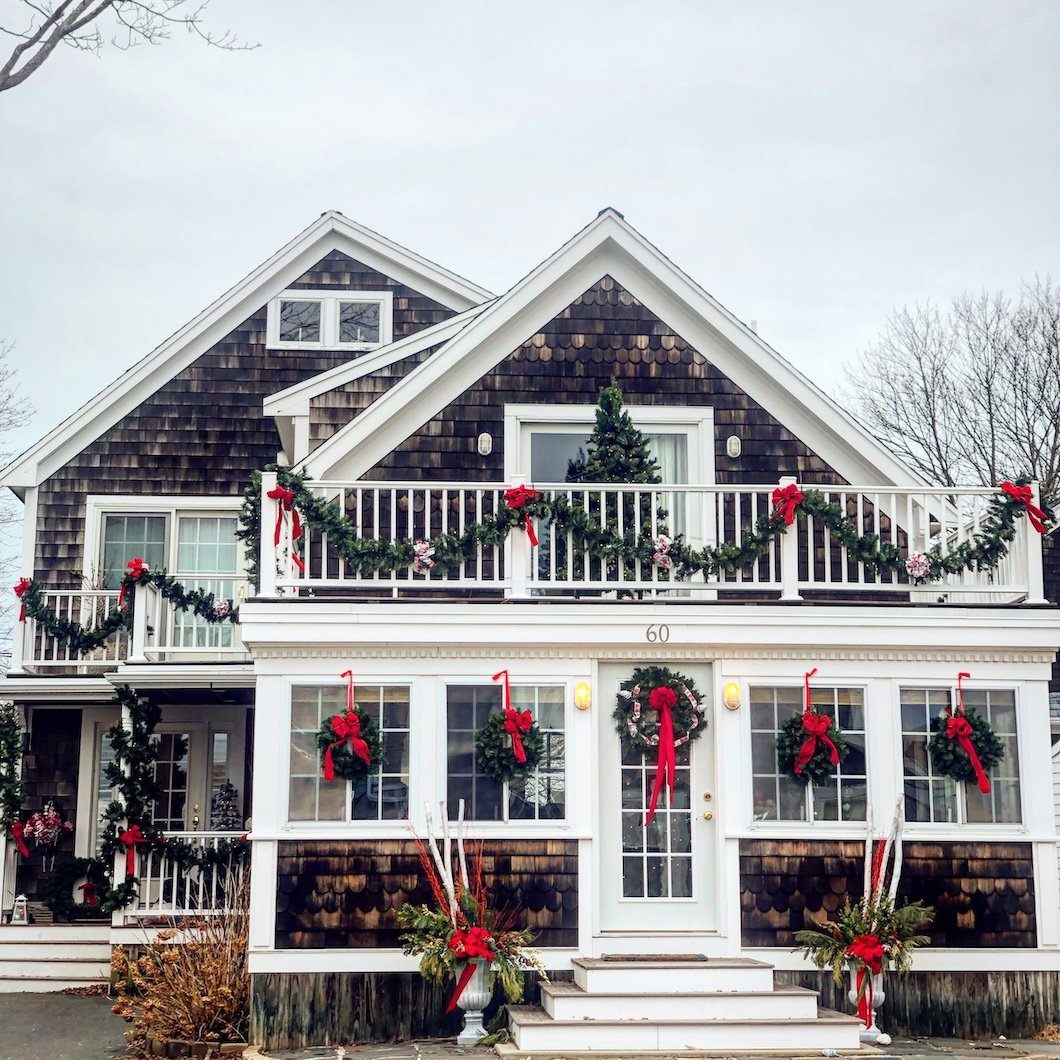
Photo by Lindsay Doyle on Unsplash
There is a moment every December when a house stops being a private place and becomes a public object.
It usually happens quietly. Someone says, “People will be here in a couple of weeks.” Nothing else changes, technically. The walls are the same. The furniture hasn’t moved yet, but…the house knows.
And so do you.
From that point on, the walls are no longer neutral. They have opinions.
This is the peculiar pressure of hosting season. The house is no longer allowed to simply exist. It must perform. It must feel warm, intentional, composed and capable of holding people without drawing attention to itself. And once that expectation settles in, everything starts to feel louder. The ceilings feel lower. The corners feel sharper. The paint, in particular, begins to behave differently.
Christmas lighting doesn’t help. It never does. It’s warm, directional, and placed with enthusiasm rather than strategy. It glows from corners and windows, grazes walls at odd angles, and illuminates surfaces that have spent most of the year minding their own business. A patch you forgot about reappears. A color you trusted begins to shift. Undertones you were never warned about arrive uninvited.
This is usually when a homeowner pauses, looks around, and thinks, This felt fine before.
That thought alone carries weight.
Hosting pressure isn’t really about impressing people. It’s about exposure. When people come over, the house stops reflecting only you. It becomes a container for memory, judgment, nostalgia, and comparison—most of it internal. Guests are thinking about food, conversation, where to put their coat. Homeowners are thinking about the walls.
This is the lie we tell ourselves every year: No one notices.
And it’s true. Mostly. No one is cataloging your paint choices. But the homeowner does, relentlessly. You see how the dining room feels under candlelight. You notice that the living room, once “cozy,” now feels crowded when the tree is up. You become acutely aware that this particular shade of neutral has a personality at night—and that personality is not generous.
Paint doesn’t cause this tension. It amplifies it.
Paint is emotional infrastructure. When everything else comes out—decorations, traditions, people—the walls are what remain. They absorb the light. They hold the sound. They frame every interaction. When they’re right, they disappear. When they’re wrong, they clear their throat at the worst possible time.
December is when that clearing of the throat becomes impossible to ignore.
This is also when panic cleaning begins.
It’s a specific kind of cleaning, fueled less by hygiene and more by existential dread. Drawers are opened that haven’t been touched in months. Objects are relocated with no long-term plan. A chair is moved six inches and reconsidered deeply. Baseboards, ignored all year, suddenly feel like moral failures. In the middle of it all, the walls watch—immovable, unchanged, silently bearing witness to your attempt at control.
Panic cleaning is rarely about cleanliness. It’s about restoring order in a moment when the house feels slightly out of alignment. And once that illusion of control slips, attention often turns upward, outward and toward the walls themselves.
That’s when the most dangerous thought of the season appears, usually late at night, usually after a drink: We could repaint before everyone comes.
It’s an optimistic thought, but definitely a reckless one. It begins with “just one wall” and ends with furniture hovering awkwardly for days, touch-ups that never quite dry, and the faint smell of fresh paint competing with pine, citrus, and whatever you’re cooking to prove you’re coping well.
Holiday painting is rarely about improvement…
It’s about control.
The calendar is unforgiving, the light unreliable, and the pressure already high. Even when the result is technically fine, the process lingers, leaving the house unsettled, as if it knows you made a decision under duress.
And, yes…the walls remember.
At Stanwich Painting, we advise restraint during this time of year, though it’s rarely expressed in that manner. December is not a time for fixing; it’s a time for observing.
Winter light is slow and honest. It stays low in the sky, moving across walls instead of flooding them. It exposes undertones summer happily hides. A color that felt calm in daylight may feel sharp after dark. A room that once felt inviting may suddenly feel exposed when it’s full of people and conversation stretches longer than planned.
This isn’t failure; its information.
Paint fatigue often shows up now, not as urgency but as indifference. “I don’t hate it,” people say. “I just don’t love it anymore.” That sentence tends to surface in December because the house is being asked to do more emotional work than usual. Hosting reveals whether a space was designed for living or merely for looking acceptable.
There’s also a quietly existential aspect to this season. The holidays bring memories, and some colors feel inherited, while certain rooms evoke the sense of artifacts from a different chapter of life. A paint choice made years ago can suddenly feel like it belongs to a version of yourself that no longer resides there.
The house hasn’t changed…
You have.
December has a way of surfacing that truth without ceremony. The walls don’t accuse: they simply reflect.
And that reflection is useful, if you let it be.
Some of the most thoughtful projects we’re involved in each year start with observations made during hosting season. These aren’t panic decisions or last-minute fixes, but rather calm realizations formed under real conditions: how a room behaves when it’s full, how it feels at night, or whether it supports the kind of gatherings you actually host, not the ones you imagine.
Remember: January is better for action, while December is better for clarity.
For now, the goal isn’t perfection so much as ease: a home that can hold people comfortably without needing to be managed, where paint does its work quietly, steady and forgiving, especially when the house itself is under pressure.
So let the decorations be expressive. Let the hosting be imperfect. Let the house reveal what it needs to reveal.
If your walls seem to be whispering, We should talk later, listen.
At Stanwich Painting, we’ve learned that the best decisions are rarely made in the middle of the season—but they’re often informed by it.
We’ll be here when the guests go home and the lights come down.
(Want to plan that refresh for January 2026? Contact us today!)